If you are trying to figure out how to pick outfits for photoshoots, start with three looks you can sit, stand, and breathe in. You do not need a new wardrobe, a matching set for every mood, or a shopping trip that leaves you more unsure than when you started. For a boudoir session, the outfits that photograph well are the ones that already feel like you and still look polished once you start to move.
At Tabetha Rae Photography, a standard session in the Cabot studio includes three outfit changes. Hair and makeup come first, and that is when the wardrobe gets narrowed down with you. If your closet feels too plain, the budget outfit guide shows everyday pieces that already photograph well. You can arrive with options. You do not have to decide every look alone the night before.
How to pick outfits for photoshoots in three steps
Treat this like packing for a day you actually want to remember, not like building a costume. Three looks are enough for a full gallery when each one has a different job to do.
- Name the feeling first. Pick two or three words before you open a drawer. Soft and calm. Polished and classic. Playful and personal. Those words keep you from buying a piece that looks good on a hanger and wrong on you.
- Pull what you already own. A favorite bra and bottoms, a button-down, a robe, a bodysuit, or a simple tank can carry a look. If it makes you stand a little taller when you put it on, it belongs in the maybe pile.
- Test fit, then stop at three. Sit, raise your arms, and walk a few steps in each piece. If you keep tugging a strap, leave that one at home or bring it only as a backup. Then choose one covered look, one fitted look, and one that feels a little braver.
That order matters more than people expect. Shopping first usually means more bags and less clarity. Choosing the feeling first means every piece has a reason to come to the studio.
Start with a feeling, not a shopping cart
Most women get stuck because they start with a product page. A better first question is what you want the photographs to feel like when you look at them later. A cozy morning is a different wardrobe from a polished portrait, even if both happen in the same room.
Write the words down. Then use them as a filter. If a piece does not support the feeling, it does not earn a spot, even if it was on sale. This is also the easiest way to talk with your photographer. "I want soft, warm, and a little playful" is more useful than a stack of screenshots with no notes.
Once the feeling is clear, personalized boudoir ideas can help you turn that mood into a session direction. This page stays on the clothing decision. That one stays on the bigger picture of the shoot.
You can blend two feelings if they sit well together. Soft and classic works. Playful and moody can fight each other in the same outfit, so give each feeling its own look instead of forcing one piece to do both.
Build three looks that do different jobs
Three outfit changes are the standard at the studio, so plan for three jobs instead of three versions of the same set. Variety comes from coverage, texture, and color, not from owning more lingerie.
| Look | What it does | Pieces that usually work | Watch for |
|---|---|---|---|
| Covered and easy. | Lets you settle in before anything fitted. | A button-down, robe, oversized shirt, or simple tank. | Fabric so loose it hides your shape. |
| Fitted and polished. | Gives the gallery a clean, intentional frame. | A matching set, bodysuit, slip, or structured set. | A color that only matches under bedroom light. |
| Personal, or a little braver. | Adds one image that could only be yours. | A favorite robe, a meaningful shirt, or a piece you almost left at home. | Anything you would spend the session adjusting. |
The covered look is not a throwaway. Many women like those images most because they still look like themselves. The fitted look is where coordination matters. Even a small color mismatch can read louder on camera than it does in the mirror. The third look is the one with a story, not the one that is the most revealing.
If the three jobs still feel abstract, use the budget guide for piece ideas and use this page to decide which three to bring. A list of options is not the same as a decision.
Fit and movement matter more than the label
A piece can be the right style and still be the wrong outfit. Fit is the difference between a photograph that looks effortless and one where you look like you are holding your breath.
Try everything on at least a few days ahead, not the morning you leave. Sit down. Lift your arms. Turn to the side. Notice whether a strap slides, a seam cuts in, or the fabric bags at the waist. If you are thinking about the clothes, that thought shows up on your face.
A few fit checks that save a disappointing look:
- Loose nightgowns and very oversized tops tend to hide the shape you came to celebrate. A little room to move is fine. A tent of fabric is not.
- Coordinated sets photograph cleaner than pieces that are "close enough" in color. Slight differences stand out more on camera.
- Straps you have to keep placing are a distraction. If you love the piece, bring a backup strapless or a different neckline.
- Anything that leaves deep marks from a tight band will need time to fade, so do not put it on for the drive to the studio.
The studio's own prep notes put it simply. Start planning the wardrobe about three weeks out, try everything on ahead of time, and bring a variety so you can choose in the moment. That timeline is long enough to reorder a size and short enough that you do not lose interest.
You are not graded on how much you bought. Some clients have walked in wearing the clothes they chose that morning and built a session from there. Others have brought a large pile because choosing was genuinely hard. Both approaches are fine. The pile gets edited during hair and makeup, not in the parking lot.
What to bring, and what to leave at home
Pack for options, then edit. If you are on the fence about a piece, bring it. It is easier to set something aside in the studio than to wish you had it. It is also easier to edit a pile of six than a pile of thirty, so do the first cut at home.
Bring:
- Your three first-choice looks, on hangers if you can, so they do not arrive wrinkled.
- One backup in a different coverage, in case a strap or a fit feels wrong once hair and makeup are done.
- Heels only if you like them. A taller, simpler heel can lengthen the leg. Skip heavy patterns and ankle straps if the shoe would pull focus. Bare feet are a complete option.
- A bridal detail if you are marking a wedding season: a veil, a garter, or the lingerie you already chose for the day. Bridal boudoir is a moment in the session, not a different kind of photography.
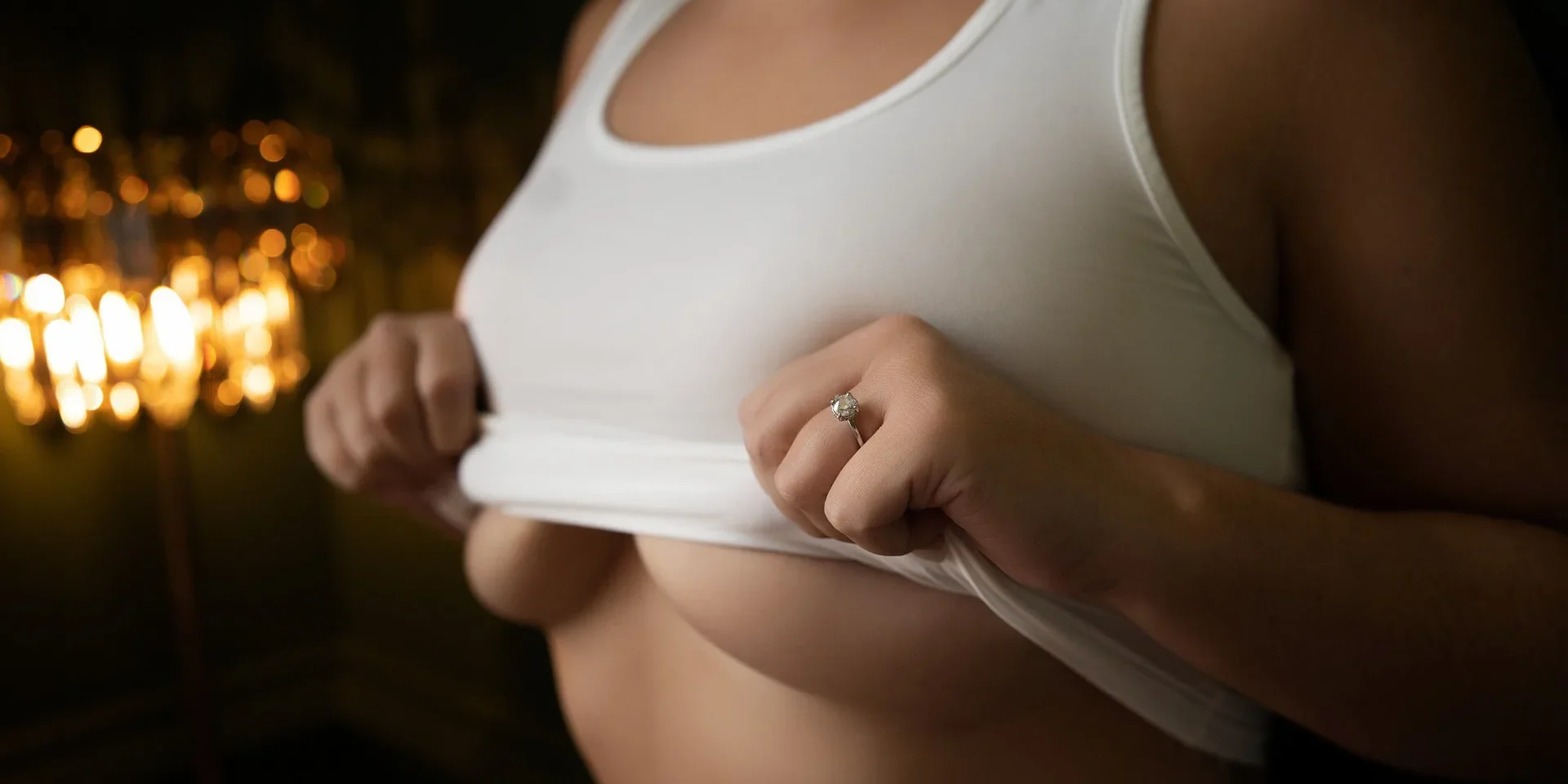
- Simple jewelry you already wear, especially a ring that matters. Skip chunky bracelets and statement necklaces. You are the subject.
Leave at home:
- Anything you have never worn, with the tags still on, unless you have tried the movement test.
- Pieces that need constant adjusting to stay in place.
- A basket of props. One meaningful item is stronger than five unrelated ones. The prep guide on the site is direct about this: you are the star, and extra props compete with you.
- Tight jeans or a tight bra for the drive in. The studio has a robe for hair and makeup. Arrive in something loose so waistbands and straps do not leave lines.
If you have prepaid for a collection, the client closet is there as a bonus, with nearly 300 pieces from XS to 5XL. It is not a requirement, and it is not a reason to show up with nothing if you already own pieces you love. Bring yours. The closet fills gaps.
Let wardrobe guidance finish the edit
You do not have to walk in with a final styling plan. At the Cabot studio, the session day starts with professional hair and makeup, and the outfits get reviewed while that is happening. Three looks get chosen for how they photograph and how they vary, not for how expensive they were.
That review is part of the session, not an add-on you have to request. Posing is guided the same way. You do not need to know what to do with your hands, and you do not need a modeling background to wear what you brought. The session experience is built so the planning, the wardrobe edit, and the photographs happen with you, not to you.
A few things worth saying out loud before the camera comes out:
- Which look you want to start in, so the first frames are the easiest ones.
- Any piece you are nervous about, so it can be saved for later or skipped without a speech.
- A color you love and a color you do not want in the gallery.
- Whether you want one image in something that is yours from home, even if the other looks come from the closet.
If a piece still feels wrong once you have it on, that is useful information. Set it aside. A gallery of images where you look comfortable will always beat a gallery where you endured the outfit.
A simple plan for the three weeks before
You can do this without a spreadsheet. Three short checks are enough.
Three weeks out. Name the feeling and pull a maybe pile from your own closet. Shop only for the gap, not for a whole new wardrobe. If you need a second size, this is the week to order it. The studio also sends shopping suggestions after you book, so you do not have to guess every store on your own.
One week out. Try each piece on and do the movement test. Pick the three jobs: covered, fitted, and personal. Put the backups in a separate bag so they do not take over the first choices. If you are a bride, set the veil or garter with the personal look so it does not get lost in the pile.
The day before. Hang the three looks where you can see them. This is not a tech project, so there is nothing to charge. Lay out loose clothes for the drive to Cabot, and eat something normal. The outfits are decided enough.
Sessions are one client a day, so there is time to change, look at a strap, and swap a piece without rushing the next person. You are not packing for a five-minute time slot.
If the date is still a ways off, that helps. Booking is often planned six to eight weeks before you need finished artwork, and dates can be set much further out. Wardrobe is easier when you are not also racing a deadline.
Frequently asked questions
Do I have to wear lingerie?
No. Lingerie is optional. A button-down, a robe, a bodysuit, denim with a simple top, or a favorite shirt can all photograph well. Choose what matches the feeling you named, not what a catalog says a boudoir session requires.
How many outfits should I bring?
Plan on three outfit changes, which is what a standard session includes. Bring those three plus one backup if you are unsure about fit. If you are torn, bring the extra piece. It is better to have it and skip it than to leave it at home.
What if nothing I own feels right?
Start with fit and a color you already wear, not with a trend. If you have prepaid for a collection, the client closet covers sizes XS to 5XL and can fill the gap. You can also bring one piece from home so the gallery still has something that is yours.
When should I start choosing?
About three weeks before the session is enough time to try pieces on, reorder a size, and stop second-guessing. The night before is for hanging the looks, not for deciding what boudoir means.
Will someone help me choose on the day?
Yes. Wardrobe gets reviewed during hair and makeup, and the three looks are chosen with you. You can say what you love and what you want to skip. You will not be handed a camera and told to figure out the outfit alone.
Want help choosing what to bring? Schedule a call and we can talk through the feeling, the three looks, and the day itself.