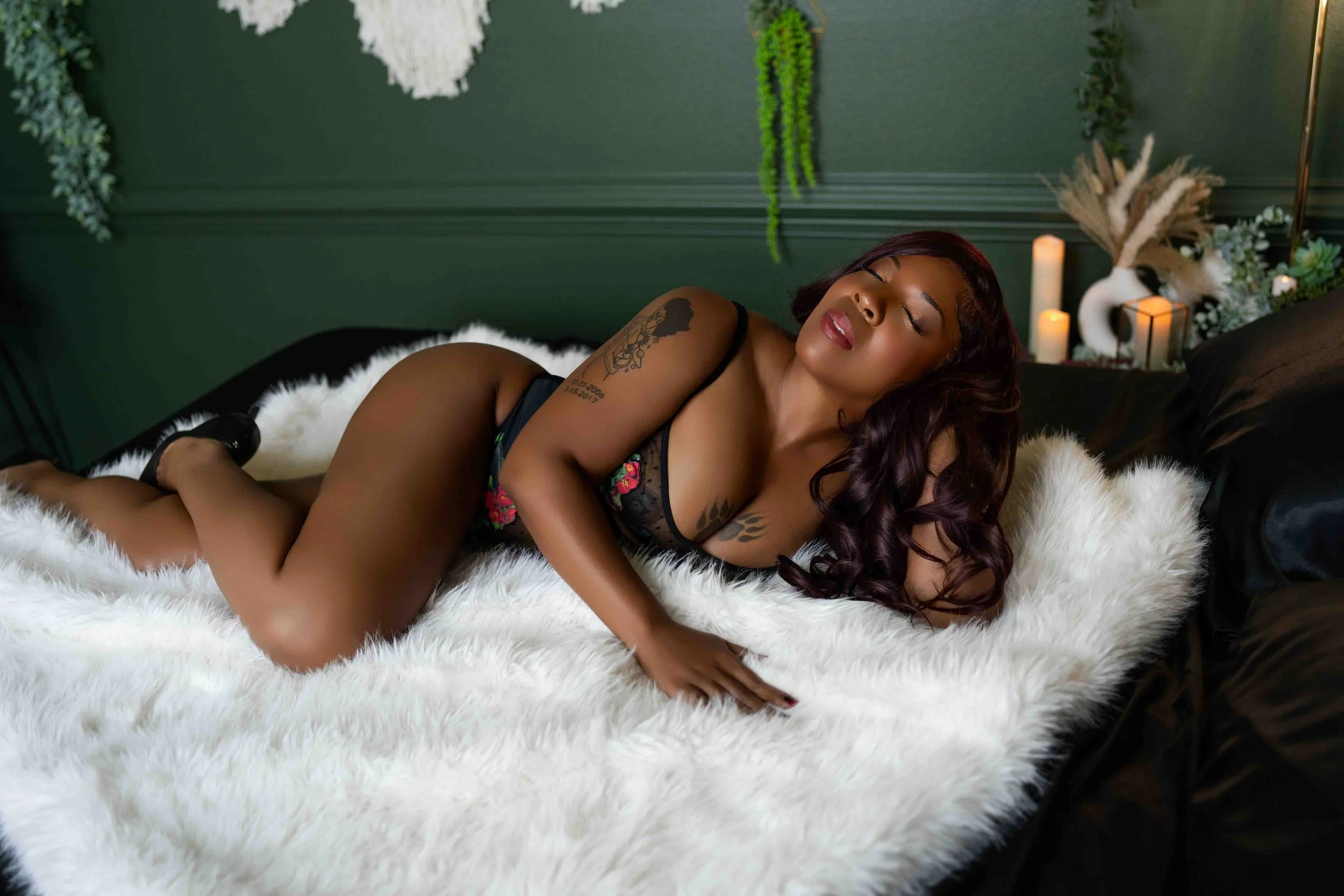
Looking for boudoir photo ideas but not sure where to begin? You do not need a complete concept, a professional modeling background, or a fixed list of poses. The best session starts with a few details that feel like you: a mood, an outfit you love, a meaningful accessory, or simply the way you want to feel when you see your images. From there, your photographer can help shape a personalized experience that feels natural, guided, and comfortable.
Schedule a call to talk through your boudoir session ideas
Start with the feeling you want your images to have
Before choosing lingerie or searching for elaborate sets, think about the feeling you want your photographs to carry. You might want images that feel soft and relaxed, polished and editorial, playful and bright, quietly powerful, or classic enough to revisit for years. There is no correct mood for a boudoir session. A personal direction matters more than following a trend.
Try choosing three words that describe your vision. For example:
Soft, natural, and calm
Bold, polished, and confident
Romantic, warm, and timeless
Playful, relaxed, and personal
Moody, artistic, and dramatic
Simple, clean, and elegant
Use those words as a filter when you save inspiration. If a pose, color, or outfit does not support the feeling you want, you can leave it out. Your mood words can also help your photographer suggest lighting, hair and makeup, wardrobe pairings, and a pace for the session.
Boudoir photo ideas organized by mood
You can build a whole session around one direction, or blend two that work well together. These ideas are starting points, not a required shot list.
Soft and natural
For a gentle, everyday feeling, consider a simple bralette, an oversized button-down shirt, a knit sweater, or a robe in a color you enjoy wearing. Bare feet, loose hair, and natural movement can keep the images relaxed. Sitting near a window, wrapping up in a blanket, or taking a quiet pause between poses can create photographs that feel like your real personality instead of a performance.
Classic and polished
A matching set, a satin robe, simple jewelry, and a clean color palette can create a timeless direction. Black, ivory, champagne, or deep jewel tones are easy to build around, but your favorite color can be just as elegant. Ask for images in both color and black and white if that fits your photographer's editing style. A polished concept often works best when the styling stays intentional rather than crowded.
Playful and personal
Let your personality lead. A favorite team jersey, a vintage cardigan, a bright pair of shoes, a record, or a piece with an inside joke can add a lighter note. You might include a colorful manicure, bold lipstick, or a fun hair detail. The goal is not to create a costume. It is to give your gallery a few images that make you smile because they could only belong to you.
Moody and artistic
If you prefer a more dramatic look, think about contrast and texture instead of adding more props. A dark robe, lace, structured bodysuit, velvet, or a strong silhouette can work with shadow and directional light. A mirror, a chair, or a textured wall may be enough to support the concept. Share the feeling with your photographer ahead of time so the lighting and posing can be planned around it.
Bridal and milestone-inspired
A veil, a pair of earrings, a perfume bottle, a garter, a robe, or a meaningful piece of wedding-day detail can bring a bridal direction into your session. The photographs do not have to be only about a future spouse or a gift. They can also mark a season of your life and celebrate you before the wedding day arrives. If you are planning a bridal session, the bridal boudoir planning guide can help you think through timing and personal details.
Choose a setting that supports your story
A personalized session does not need a complicated location. In many cases, one or two intentional areas create more variety than a room filled with decorations. Look for a setting that supports your mood and gives you somewhere comfortable to sit, stand, lean, or move.
Window light: Soft natural light can complement a relaxed, airy, or classic concept.
Bed or linens: Sheets, blankets, or a robe can create a cozy morning-inspired direction.
Chair or couch: Furniture adds options for seated poses and gives your hands something natural to do.
Mirror or vanity: Reflections and getting-ready details can suggest a quiet, editorial story.
Clean wall or floor: A simple background keeps attention on your expression, shape, and styling.
Texture: Velvet, wood, greenery, or fabric can add visual interest without distracting from you.
At Tabetha Rae Photography, the natural-light in-home studio in Cabot, Arkansas, is designed around a private, personal experience. You do not need to arrive with a fully designed set. Bring a few ideas and let the available light, furniture, and your photographer's direction help you find what works.
Wardrobe ideas that feel like you
The strongest wardrobe choice is usually the one that lets you breathe, move, and stay present. An outfit does not have to be the most revealing option to photograph beautifully. It should fit well enough that you are not constantly adjusting it, and it should support the mood you chose.
Start with what you already own
Before shopping, look through your closet for pieces that already make you feel good. Consider:
A favorite bra and bottoms
An oversized button-down shirt
A fitted tank, camisole, or T-shirt
A silk or satin robe
A bodysuit or slip
High-waisted bottoms with a bralette
A sweater that falls naturally off one shoulder
A partner's shirt, jacket, or jersey
A pair of jeans styled with a simple top
Personal clothing can make the images feel grounded and recognizable. It can also be a practical way to try a boudoir session without buying an entirely new wardrobe.
Choose pieces for comfort and movement
Try each outfit on before your session and move in it. Sit down, raise your arms, walk, and notice whether the fabric shifts or pinches. If you keep thinking about adjusting a strap or pulling a hem into place, that distraction may show up in your expression. Bring options, but do not pressure yourself to wear anything that does not feel right.
If you have questions about fit, bring the pieces you are considering and ask for help choosing. Professional styling guidance can make it easier to combine textures, layers, and accessories without losing your own style. A client closet may also be available depending on the session and collection arrangements, so ask during your consultation rather than assuming what is included.
Add meaningful details without making the photos feel staged
Props are most effective when they tell a small part of your story. You do not need a basket of accessories. One meaningful item can create a stronger image than several unrelated pieces.
Ideas to consider include:
A necklace, ring, or bracelet connected to someone or something important
A handwritten note, favorite book, or journal
A perfume bottle or beauty item you use often
A veil, shoes, or other bridal detail
A record, instrument, or hobby-related object
A favorite robe, sweater, or item with a memorable texture
A flower, bouquet, or seasonal detail
A meaningful shirt, jersey, or jacket
Think of these items as conversation starters and visual accents, not things that need to appear in every photograph. Tell your photographer why an item matters if you are comfortable doing so. That context can help determine whether it belongs in a close detail, a wider scene, or a brief transition between outfits.
Plan for variety without planning every pose
It is helpful to know what you like, but a long list of exact poses can make a session feel like an assignment. Instead, collect broad references. Save examples of lighting, posture, outfits, expressions, hands, angles, and the kind of story an image suggests. Then describe what you like about each one.
For example, you might say, âI like the soft window light,â âI want a few images where I look directly at the camera,â or âI like how this pose feels relaxed rather than highly posed.â Those observations give your photographer useful direction without asking for a copy of someone else's photograph.
At a guided session, you do not have to know where to put your hands or how to angle your body. Posing and expression coaching can help you move through options one step at a time. Small changes in shoulder position, chin angle, weight, or hand placement can create variety while still feeling like you.
Build a simple session mood board
A mood board can be as simple as a phone album with ten to fifteen images. Organize it around the decisions that will help your photographer:
Mood: Choose two or three words that describe the overall feeling.
Color: Note whether you prefer light neutrals, deep tones, soft colors, or something bright.
Wardrobe: Save examples of silhouettes and layers, not only specific brands.
Light: Point out whether you prefer bright window light, contrast, or a softer shadowed look.
Details: List the one or two personal items you may want to bring.
Boundaries: Note anything you do not want included, shared, or photographed.
Share the board before your session if possible. It gives you and your photographer a common language and leaves room for ideas that develop in the studio.
Remember that privacy is part of personalization
A session can only feel personal if you can make choices about your comfort and your images. Before booking, ask how the studio handles privacy, image selection, and image release. You can talk through what you are comfortable wearing, who will be present, whether you want images used for marketing, and how you want your final artwork handled.
Tabetha Rae Photography offers a private, one-session-per-day experience and discusses image-release choices with clients. Marketing use should follow the release you choose. You should never feel pressured to share an image simply because you like it. Clear conversations before the camera comes out can make it easier to relax during the session.
For more preparation ideas, review the studio's guide to getting the most out of your boudoir experience. It covers practical preparation while leaving room for your individual preferences.
How to turn your ideas into a personalized plan
Once you have chosen a direction, keep the plan simple. Write down your three mood words, your preferred wardrobe options, and any details you want to bring. Add a short list of boundaries and questions for your consultation. That is enough to start a thoughtful conversation.
Your plan might look like this:
Overall mood: Soft, confident, and timeless
Wardrobe: A black set, an oversized shirt, and a favorite robe
Setting: Natural window light, a chair, and cozy linens
Personal detail: A necklace from a meaningful milestone
Images to request: A mix of color, black and white, close details, and relaxed movement
Privacy choice: Confirm your image-release preference before the session
This kind of outline gives you direction without locking you into a fixed shot list. Your photographer can help you refine the order, make the most of the light, and adjust the plan to your comfort in the moment.
Ready to shape your own ideas? Schedule a no-pressure consultation with Tabetha Rae Photography to talk through your vision, experience, pricing, and next steps.
Frequently asked questions about boudoir photo ideas
What if I do not have a clear idea for my session?
That is completely fine. Start with one outfit, color, object, or feeling you like. A consultation and guided posing can help you develop the rest. You do not need to arrive with a complete theme or know how to pose.
Do I have to wear lingerie?
No. A button-down shirt, robe, sweater, T-shirt, jeans, bodysuit, or other personal clothing can all support a boudoir session. Choose pieces that fit your comfort level and the mood you want to create.
How many outfits should I bring?
Bring a small range of options and let your photographer help you choose what works best. The right number can depend on the session plan, the clothing, and the time available. Avoid assuming a fixed number of outfit changes unless it has been confirmed for your booking.
Can I bring a personal prop?
Yes, a meaningful item can add personality and variety. Choose one or two pieces that matter to you and discuss them during planning. The item should support the photograph rather than take attention away from you.
What if I feel nervous about posing?
Most people are not expected to know how to pose. A guided photographer can explain each movement, adjust small details, and help you find expressions that feel natural. You can also share boundaries and questions before the session so the experience is built around your comfort.
Make the session yours
The best boudoir photo ideas are not necessarily the most elaborate. They are the ones that reflect your mood, your style, your story, and the way you want to see yourself. Choose a few starting points, leave room for guidance, and let the final images become personal rather than perfectly preplanned.