
The difference between boudoir and glamour photography is usually less about a strict set of rules and more about the purpose, mood, and experience you want. Boudoir often begins with a personal reason for making portraits, while glamour often gives special attention to a polished, composed look. The styles can overlap. Instead of choosing a label first, think about what you want the photographs and the session to feel like.
What is the main difference between boudoir and glamour photography?
Boudoir photography is often organized around the person being photographed and the reason she wants to mark a moment. That might mean celebrating a birthday, preparing for a wedding, embracing a new chapter, or setting aside time for herself. The images can be gentle, classic, playful, expressive, or bold. There is no single wardrobe or pose that makes a session boudoir.
Glamour photography often starts with a visual goal: a refined portrait, a carefully styled look, or an elevated version of a familiar portrait. Hair, makeup, clothing, lighting, and composition may be planned to create that result. Glamour can be formal or simple, dramatic or understated. It does not require a gown or a particular appearance.
These descriptions are useful tendencies, not fixed definitions. One photographer may call a carefully styled, personal portrait session boudoir; another may describe a similar set of pictures as glamour. A session can combine both: a personal reason for making portraits with professional styling and a composed finish. Your preferences matter more than finding the one technically correct word.
For a practical comparison, ask what leads the planning. Is it a story or milestone you want to honor? Is it a particular finished look you have in mind? Is it both? Those answers help a photographer understand your priorities before discussing clothing, posing, and setting.
How does the purpose shape the session?
Purpose affects choices throughout the process, but it does not dictate how you have to look. Someone drawn to boudoir might begin with a personal intention: celebrating herself, acknowledging a change, or creating a keepsake connected to a wedding. The intention can be private. It does not have to be explained to anyone else or turned into a gift.
Someone drawn to glamour may begin with the portrait she hopes to see: elegant, composed, expressive, or especially polished. That aim can still be deeply personal. A photograph can feel both refined and true to the person in it. These categories do not divide personal meaning from beautiful styling.
Try writing a one-sentence purpose before you book. “I want to remember that I made room for myself this year” describes a personal intention. “I want a classic portrait with careful styling” describes a visual goal. “I want a personal experience and a classic finish” brings the two together. Keep the sentence simple. It is a starting point for a conversation, not a brief you must follow exactly.
It can also help to describe what success would look like after the session. Would you be glad you made the time, even before seeing the images? Do you hope to keep an album that marks a milestone? Do you want a particular expression or mood in a portrait? A clear answer helps you distinguish the parts that are essential from details you can leave open.
Your reason can change as you plan. A person might first think about a wedding and later realize the most important part is making a portrait for herself. Someone else might arrive with a mood board and discover that the conversation matters as much as the pictures. That flexibility is normal. Tell the photographer when your priorities shift so the plan can shift with them.
How do wardrobe and styling compare?
Wardrobe is flexible in both styles. For boudoir, a person might choose a favorite outfit, a robe, a bodysuit, a slip, a sweater, or another piece that feels like her. Some prefer simple clothing and a relaxed look. Others enjoy a more fashion-led direction. The clothing is a choice, not a test of whether the session fits a category.
Glamour wardrobe might include a tailored outfit, a formal dress, a statement piece, or a simple look selected for its shape and texture. The aim may be to make the clothing work with the light and the portrait’s overall composition. Glamour does not require formalwear, and boudoir does not require one specific type of garment.
Styling also includes hair and makeup, but there is no universal level of styling for either label. One person may want a polished finish that still feels familiar. Another may want a more noticeable change in appearance. Explain what “done up,” “natural,” or “classic” means to you. Those words can mean different things to different people.
At Tabetha Rae Photography, professional hair and makeup and wardrobe discussion are part of the described experience. The client closet is conditional on collection prepayment, so ask about current access and terms rather than assuming it comes with every session. Before a date is reserved, make sure you understand what preparation and wardrobe support are available for your plan.
A manageable wardrobe plan is usually more useful than packing for every possibility. Start with one outfit you already feel comfortable in. Add an option with a different shape, color, or texture if you would like variety. If a personal item matters to you, bring it up in advance and ask whether it fits the setting and the mood you want.
Consider practical comfort as well as appearance. Can you sit or move in the clothing? Does it need special care before the session? Does it feel like something you would choose for yourself? If a garment looks lovely but makes you feel distracted, it may not be the right choice for this experience. You can ask for help narrowing the options rather than making every decision alone.
Some people find it helpful to separate wardrobe questions into three groups: what they already own, what they might want to borrow or discuss, and what they do not want to wear. This last list matters. Naming a boundary early can prevent unnecessary options from being placed on the table. You do not need to justify a preference for a certain level of coverage, a particular color, or a simple outfit.
How are posing and direction different?
Neither boudoir nor glamour automatically means a particular amount of posing direction. Some people assume they need to arrive knowing how to stand, where to place their hands, or what expression to make. You do not need to plan those details yourself. Before booking, ask how the photographer guides posture, hands, expression, and movement.
A boudoir session may use guidance to create natural shapes and expressions while keeping the experience connected to your comfort and personality. A glamour session may use direction to create a more composed portrait. There is considerable overlap. The right amount of direction is the amount that helps you feel informed and present, without losing your say in what happens.
At Tabetha Rae Photography, posing is guided. You can explain what you like, what you prefer to avoid, and whether a gentle pace or more active direction feels better. The aim is not to make you copy a sample photograph exactly. It is to make choices that suit you and the intended portrait.
Ask what guidance looks like in practice. Does the photographer demonstrate a pose, offer small adjustments, explain where to look, or invite you to move between positions? If you feel nervous, hearing the process described in everyday terms can help you picture the session. Ask how to pause, change a pose, or skip an idea that does not feel right.
Direction should leave room for collaboration. If an instruction feels unfamiliar, you can ask why it is being suggested or whether there is another option. You can also tell the photographer that you want to try something once and then decide how it feels. A portrait session is not a performance with a hidden score. Your preferences belong in the process from beginning to end.
When looking at examples, remember that the finished pose is only one part of a photograph. Expression, light, angle, and timing all contribute. A pose that looks effortless in an image may have involved several small adjustments. You do not need to reproduce it precisely for your own photograph to feel considered.
What can the finished photographs feel like?
The finished images from boudoir and glamour sessions can look more alike than the names suggest. A boudoir portrait can be carefully styled and polished. A glamour portrait can feel warm, relaxed, and personal. Lighting, expression, editing, composition, and the photographer’s way of working all contribute to the result.
When you review a portfolio, look at several images rather than choosing from one striking example. Notice the range of expressions, clothing, light, and backgrounds. Ask to see work that is close to the mood you have in mind. A category name cannot tell you whether the photographer’s visual approach is right for you.
Think about how you want to enjoy the photographs after the session. You may prefer an album, wall art, prints, or selected digital images. Ask what products are available and how image selection works. Do not assume the session fee includes photographs or artwork. At Tabetha Rae Photography, the session fee reserves a planned, styled, guided shoot and later ordering appointment; selected images and artwork are purchased separately.
Products do not determine whether the photographs are boudoir or glamour. An album can hold images from either kind of session. The useful question is whether the photographs and their presentation suit what you want to remember. For one person, a keepsake album may feel right. Another may prefer one framed portrait or a digital purchase. Discuss options without feeling you must choose a product before you understand the process.
It helps to separate the different financial pieces. A fee for reserving and creating the session is not automatically the same as the cost of photographs or finished products. Tabetha Rae Photography publishes some artwork starting prices and a required prepayment plan toward at least $1,800. The published information does not establish whether the session fee counts toward that minimum. Ask the studio to explain current terms directly, and do not treat a starting figure as a confirmed total for every client.
During a reveal or ordering appointment, you may need to make several decisions: which images you want, how they might work together, and whether you prefer an album, prints, or another form of artwork. Ask how much time is set aside and what information you will receive beforehand. Knowing the order of decisions can make the appointment feel more straightforward.
How can you decide which style feels right?
Start with details you can describe, even if you are unsure about the label. You might know you want a quiet, soft mood or a more dramatic portrait. You might want professional styling and still want the finished images to feel like you. These preferences are more useful than trying to make a perfect genre choice before speaking with a photographer.
Think about your reason. Is this for self-celebration, a milestone, a personal portrait, or a particular finished look?
Choose a mood. Save a few examples that show light, color, expression, or the overall feeling you like.
Consider wardrobe. Decide whether you imagine relaxed pieces, polished everyday clothing, formal styling, or a mix.
Ask about direction. Find out how the photographer helps with posing and how you can share preferences or boundaries.
Review the artwork path. Ask what the fee covers, how image ordering works, which products are offered, and when payments are due.
Talk about privacy. Ask how image-sharing choices are handled and whether marketing use depends on your permission.
You might say, “I like the polished look of glamour portraits, but I want the session to feel personal,” or “I am drawn to boudoir, but I prefer simple clothing and soft light.” Those sentences give a photographer something useful to work with. You are not required to use industry terms perfectly.
If two styles appeal to you for different reasons, name both. You can explain that you want a composed portrait but a relaxed experience, or professional styling with a quiet mood. Avoid treating the categories as a multiple-choice question with one correct answer. A good plan can borrow the elements that matter to you.
What questions should you ask before booking?
A consultation gives you a chance to understand the process and decide whether it fits. Ask direct questions about the details that matter. You should be able to understand what happens before you make a commitment.
How would you describe the difference between your boudoir and glamour work?
Can I share examples of the mood, wardrobe, or lighting I like?
What happens during a session, and how much guidance should I expect?
What should I bring, and what wardrobe planning is available?
What does the session fee cover, and how are images and products purchased afterward?
What privacy and image-release choices are available?
How much time should I allow between booking and needing finished artwork?
Tabetha Rae Photography recommends booking six to eight weeks before finished artwork is needed. Scheduling farther ahead may be possible, subject to availability. Treat that as a planning guideline, not a guaranteed delivery date. Confirm the current schedule during your consultation, especially if the portraits are connected to a fixed event.
It is also reasonable to ask how the photographer handles a change in your preferences. Perhaps you initially want several looks but later decide you would rather keep the session simple. Perhaps you like a dramatic reference image but prefer a softer version for yourself. Ask whether you can talk through those changes during planning and how they affect the session.
Write down answers in your own words after the consultation. For example: “The session fee reserves the shoot and ordering appointment; images are chosen and purchased separately.” A short note can help you compare what you understood with the written information. If a point remains unclear, ask again before paying or signing anything.
How do you compare the experience, not just the label?
When comparing photographers, look at the full experience rather than choosing by one word or one image. Review several examples of completed work. Notice expressions, lighting, styling, and the finished products. A dramatic portrait may be beautiful, but one image does not tell you what a full session feels like.
Look for clear information about planning, image selection, artwork, and privacy. The explanation should help you understand what happens before the session, during the shoot, and afterward. If an important point is unclear, ask before reserving a date. Pay attention not only to what is offered but to how the photographer explains it.
Consider whether the photographer speaks respectfully about the people in the images. You deserve an experience that does not suggest you need to change your appearance to belong in front of a camera. A welcoming approach makes room for women of different ages, body types, and backgrounds. You should be able to describe what feels comfortable without being pressured toward a particular look.
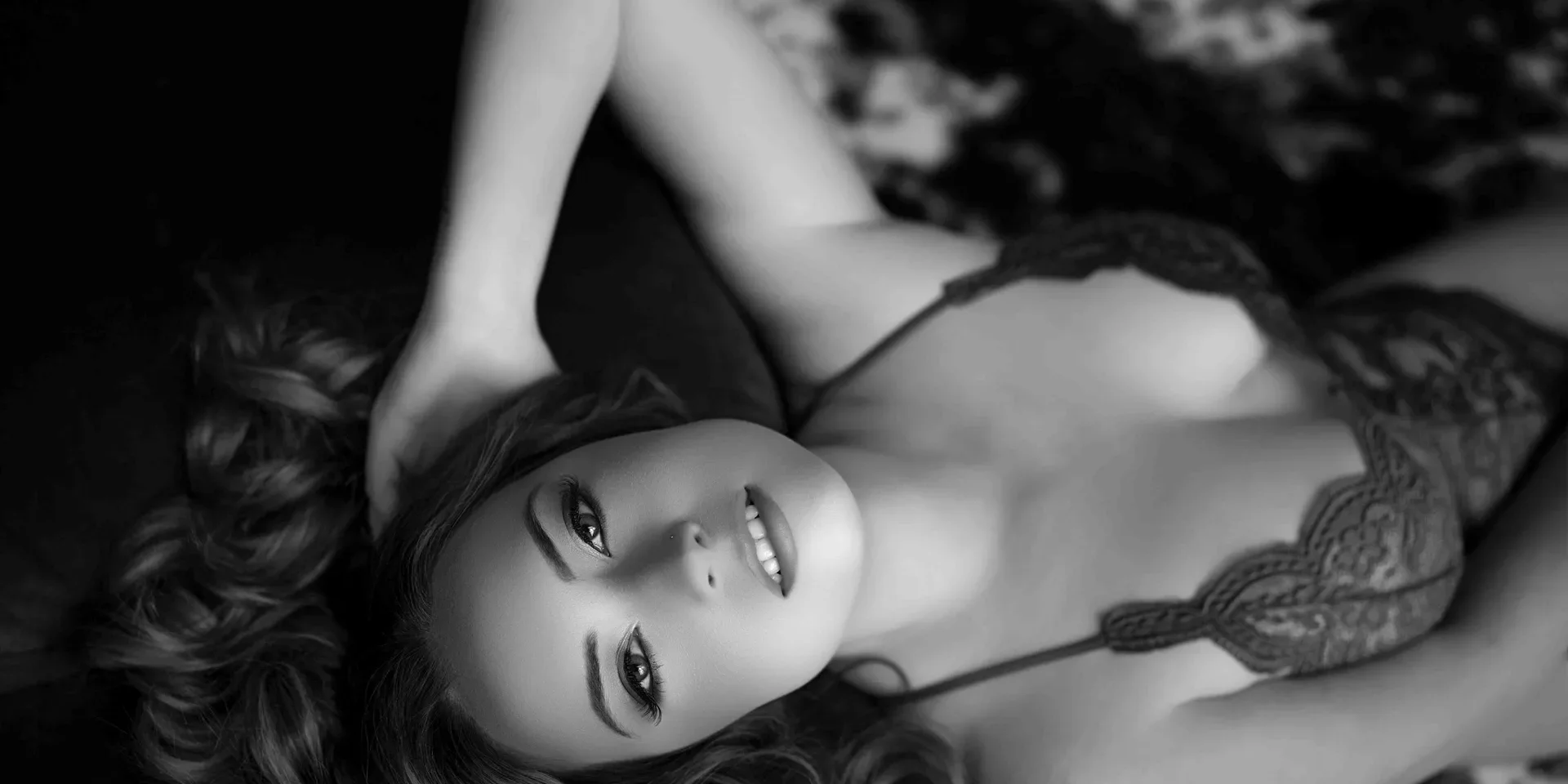
Woman in a softly lit, polished portrait setting
Price comparisons need context. A session fee, a product minimum, and an album starting price describe different things. Ask what each figure covers and whether images are included. Avoid treating one starting price as the full cost unless the photographer clearly confirms that it is. Ask the same questions of each studio so you are comparing like with like.
It can be useful to compare the sequence of the experience. One photographer may discuss wardrobe before the session; another may provide details after a date is reserved. One may schedule a separate reveal appointment; another may use a different selection process. Neither sequence automatically determines whether the work is boudoir or glamour, but it affects whether the experience suits your schedule and decision-making style.
How do lighting and setting affect the look?
Lighting changes a portrait’s mood, but it belongs to neither style alone. Soft natural light can feel calm and gentle. More directional light can create contrast and a sculpted look. A simple background may keep attention on expression and styling, while a textured setting can add atmosphere. Any of these choices can support boudoir or glamour photography.
When you review a portfolio, ask what catches your attention first: expression, clothing, light, or composition. Then consider which elements you would like in your own photographs. You can like a mood without wanting to copy every detail of a sample image. A reference is a way to communicate, not a contract to reproduce a photograph.
Ask where the session takes place and what the space is like. The photographer can explain how the room, available light, and background options shape the creative choices. If a certain kind of light or setting matters to you, mention it early. Some visual ideas depend on the available space, so an honest conversation helps set expectations.
For example, a soft portrait might use simple clothing, an unhurried expression, and gentle light. A more dramatic look might use stronger contrast and a deliberate pose. Those are creative choices, not rules about which genre is appropriate. Talk about the mood you want rather than expecting a label to select every detail.
Natural light does not mean that a photographer has no control over the image. The time of day, position in the room, background, and angle can all affect the result. Likewise, a carefully lit portrait does not have to feel formal. When discussing examples, describe what you notice rather than relying on shorthand such as “soft” or “glamorous” alone.
What does “polished” mean to you?
People use the word polished in different ways. For one person, it means professional hair and makeup and a carefully chosen outfit. For another, it means smooth lighting, a composed pose, and a finished album. It can also mean images that feel classic rather than spontaneous. Explain what you mean so the photographer can understand your preferences.
Polished does not have to mean formal or heavily styled. A simple outfit can look intentional when it works with the background. A natural expression can feel just as considered as a posed one. The aim is not to add every possible styling detail. It is to make choices that support the portrait you want.
Personal does not have to mean unplanned, either. A session can be organized and guided while still reflecting your personality. Discuss whether you prefer a quiet pace, a variety of looks, or a consistent mood. The photographer can help explain what is realistic for the session and how the choices fit together.
Try replacing broad adjectives with observable details. Instead of saying “I want it to look nice,” you might say you like warm light, a clean background, and a calm expression. Instead of “I want glamorous,” you could mention a finished hairstyle, a composed pose, and a classic outfit. Specific details give the photographer a clearer direction without requiring you to know technical terms.
How can reference images help?
Reference images are useful when they help you describe a feeling. Save a small collection that shows details you genuinely like. One image might show a quality of light, another a clothing texture, and another a relaxed pose. You do not need a large mood board or a complete visual plan.
When you share an example, explain what caught your attention. You might like its warm color, simple background, or confident posture. This helps separate the element you want from details that may not fit your session. It also avoids the pressure to reproduce another person’s exact photograph.
Look across your saved examples for patterns. Are they mostly relaxed or composed? Do you keep choosing soft light, a particular color, or uncluttered backgrounds? Those patterns can help you explain what you mean by boudoir or glamour. They are a starting point, not a requirement.
Be open to adapting a reference. A pose or setting may not translate exactly to your session, but its mood may. Tell the photographer what you like about it and ask how that quality could be expressed in a way that feels comfortable to you. You can also bring an example and say what you would change.
Keep the collection focused. If you save dozens of images with very different styles, it may be hard to see which parts matter most. Choose a few that share a mood, then note one or two details from each. That makes it easier to discuss what can be combined and what may not work together.
How do privacy and image sharing fit into the decision?
Privacy deserves a place in planning, whatever style you choose. Ask who can see your images, how they are shown during ordering, and whether photographs can appear in a portfolio or marketing. Find out what choices you have and how those choices are recorded. Booking a session does not mean agreeing to public image use.
At Tabetha Rae Photography, clients have image-release choices, and promotional use depends on the release the client chooses. Ask for the current details during your consultation so you understand the options. You can also ask whether a delayed sharing date is available, as described in the studio’s published FAQ.
It is reasonable to ask about privacy before you book. A clear conversation gives you room to understand the policy and decide what feels comfortable. If you want an image kept private, say so directly and confirm how that choice is documented. Do not assume that a photographer can infer your preference from your conversation or from the type of session.
Ask whether the release choice applies to all images or only selected photographs, and whether you can change your choice later. Do not assume the answer. A clear written explanation is more useful than a general reassurance. If you are unsure about a form, ask what each option means before signing.
How should you plan around a milestone?
If you are planning portraits for a wedding, birthday, anniversary, or another date, work backward from when you need the finished artwork. The shoot is only one step. You may also need time for an ordering appointment, product decisions, production, and shipping. Ask the photographer to explain the current schedule and whether your preferred date is available.
Tabetha Rae Photography recommends booking six to eight weeks before finished artwork is needed and describes scheduling as far as twelve months in advance, subject to availability. These are planning guidelines, not a promise of a particular delivery date. Confirm current estimates and leave extra time when portraits are tied to a fixed event.
Decide whether the photographs are primarily for you, for sharing with a partner, or for both. That can affect the format and timing, but it does not have to define the whole experience. A milestone can be a reason to make portraits for yourself and a chance to create a thoughtful gift.
If you need a physical product by a specific day, ask about the production schedule rather than assuming the date of the session is the only timing factor. Published delivery estimates can vary by product. Leave room for the ordering appointment and for your decisions about the finished artwork.
A simple backward plan can help. Write down the date you need the finished piece, then ask when the studio recommends the session take place. Confirm when image selection happens, when product choices are due, and what delivery estimates currently apply. If any date is essential, tell the studio early and ask what can and cannot be confirmed.
What is worth comparing when you look at portfolios?
Compare galleries as a whole, not just the most dramatic image. Notice whether the photographer shows different expressions, styling choices, and compositions. Do the photographs feel varied while keeping a consistent point of view? Can you imagine yourself being photographed in that environment?
Look for examples close to your preferences in wardrobe and mood. If you want understated portraits, a portfolio made mostly of highly styled images may not answer your questions. If you want a polished look, ask to see how that approach appears across a full session. The photographer can explain how choices vary from person to person.
Notice whether the photographs feel individual. A portfolio should give you ideas, not imply that everyone needs to look or pose the same way. Consider whether the work leaves room for different ages, body types, and backgrounds, and whether the overall approach feels welcoming to you.
Finally, look at finished products if they are important to you. A portrait on a screen and a designed album are different ways to experience photographs. Ask what examples you can see and how images are chosen for a finished piece. This can help you connect your creative preferences with practical decisions.
As you review, separate what you like in the photograph from what you think you are expected to like. You might enjoy the color and light but not the outfit. You might like the expression but prefer a different background. Being able to name those differences helps the photographer build a plan around you rather than around a single sample image.
Can a session combine boudoir and glamour?
Yes. Because the terms overlap, a session can bring together the parts you like in each style. You might want the personal focus and relaxed pace associated with boudoir, along with professional hair and makeup and a carefully finished portrait. Or you may want a classic glamour look with a more intimate, natural mood.
Describe details rather than asking a label to do all the work. Mention clothing, lighting, background, expression, and level of polish. A few reference images can help, but explain what you like about them. It may be the soft light, composition, or calm expression, rather than the exact outfit.
Share what you do not want, too. You can ask for a more covered wardrobe, simple posing, or a less dramatic look. Clear preferences help the photographer plan thoughtfully and help you feel more at ease. You can also say that you are open to suggestions but want to make the final decisions together.
It may help to choose one primary mood and one supporting detail. For example, you might want a calm, personal session with a polished finish, or a composed portrait with relaxed expressions. If you try to combine too many unrelated visual ideas, the plan can become confusing. A clear priority makes room for variety without making every image feel disconnected.
What if you feel nervous about being photographed?
Feeling unsure does not mean you have to abandon the idea or arrive feeling completely confident. Many people are not used to being photographed in a personal way. A consultation lets you ask questions and learn how the photographer works before deciding whether to book.
During the conversation, notice whether you feel listened to. You should be able to talk about your comfort level without being pushed toward a look or pose. Ask how you can request a pause, change direction, or skip an idea. The session is collaborative, and your preferences matter throughout it.
Try not to set a requirement that you must feel a certain way before the session. Confidence is not a prerequisite for making portraits. You can begin with curiosity, a personal reason, or simply a wish to try something new. The photographs are a record of a moment, not a test you need to pass.
It can help to plan one small step at a time. First, explain what you hope to get from the session. Next, ask about wardrobe and direction. Then decide whether the photographer’s approach feels right. You do not have to settle every detail in the first conversation.
If you are nervous about a particular part, name it specifically. Perhaps you are unsure about posing, wardrobe, being seen during the ordering appointment, or choosing products. A specific question is easier to answer than a general worry. You can ask what happens, what choices you have, and what you can decide later.
How can you make a short planning list?
A short list keeps planning manageable. Write down why you want portraits, three words for the mood, and any practical details that matter. Your words might be “soft, classic, confident,” or “personal, warm, polished.” You do not need to settle on a genre before sharing the list.
Add wardrobe questions and comfort preferences. You might want to know whether you can bring clothing from home, what preparation is suggested, and how posing guidance works. If you have a concern about an outfit, angle, or level of styling, mention it during the consultation rather than hoping it will be obvious on the day.
Keep practical decisions separate from creative preferences. A style can sound perfect but still need to fit your schedule, budget, and product plans. Ask for current pricing and what each payment covers. Since photographs and artwork are purchased separately from the session fee at Tabetha Rae Photography, clarify the process before choosing a date. Published starting prices and prepayment terms do not establish one confirmed total for every client.
Once you have answers, decide at your own pace. A consultation is for understanding fit and next steps, not a requirement to book immediately. If the photographer’s approach, communication, and artwork options make sense for you, you can move forward with a clearer idea of what to expect.
Here is a sample planning note: “I want portraits for myself, with a calm and classic mood. I prefer simple wardrobe options and clear posing direction. I would like to understand how privacy choices work and what products cost before I decide.” A short note like this gives the conversation shape without turning it into a rigid set of demands.
Which photography style should you choose?
Choose based on the experience and images you want, not a rigid definition. Boudoir may suit you if you want a personal, self-focused portrait session. Glamour may appeal if you are drawn to a polished, carefully styled look. If both descriptions feel right, say so. A thoughtful conversation can turn your preferences into a plan.
Tabetha Rae Photography is a Cabot, Arkansas studio serving Central Arkansas, with guided boudoir portraits for women, professional hair and makeup, wardrobe discussion, and a later image-ordering appointment. You can ask about the process, pricing, products, and privacy choices before deciding whether the experience fits. For more about the studio, visit Tabetha Rae Photography, or browse the studio blog for additional planning articles.
Before booking, make sure you understand the distinction between the session fee and the images or artwork you may choose later. Ask about the current prepayment terms, timing, and privacy options in the same conversation. Clear answers make it easier to decide whether the experience and the finished photographs align with what you want.
Call to talk through your session ideas
The right session is the one that respects your preferences and gives you portraits you will be glad to keep.
