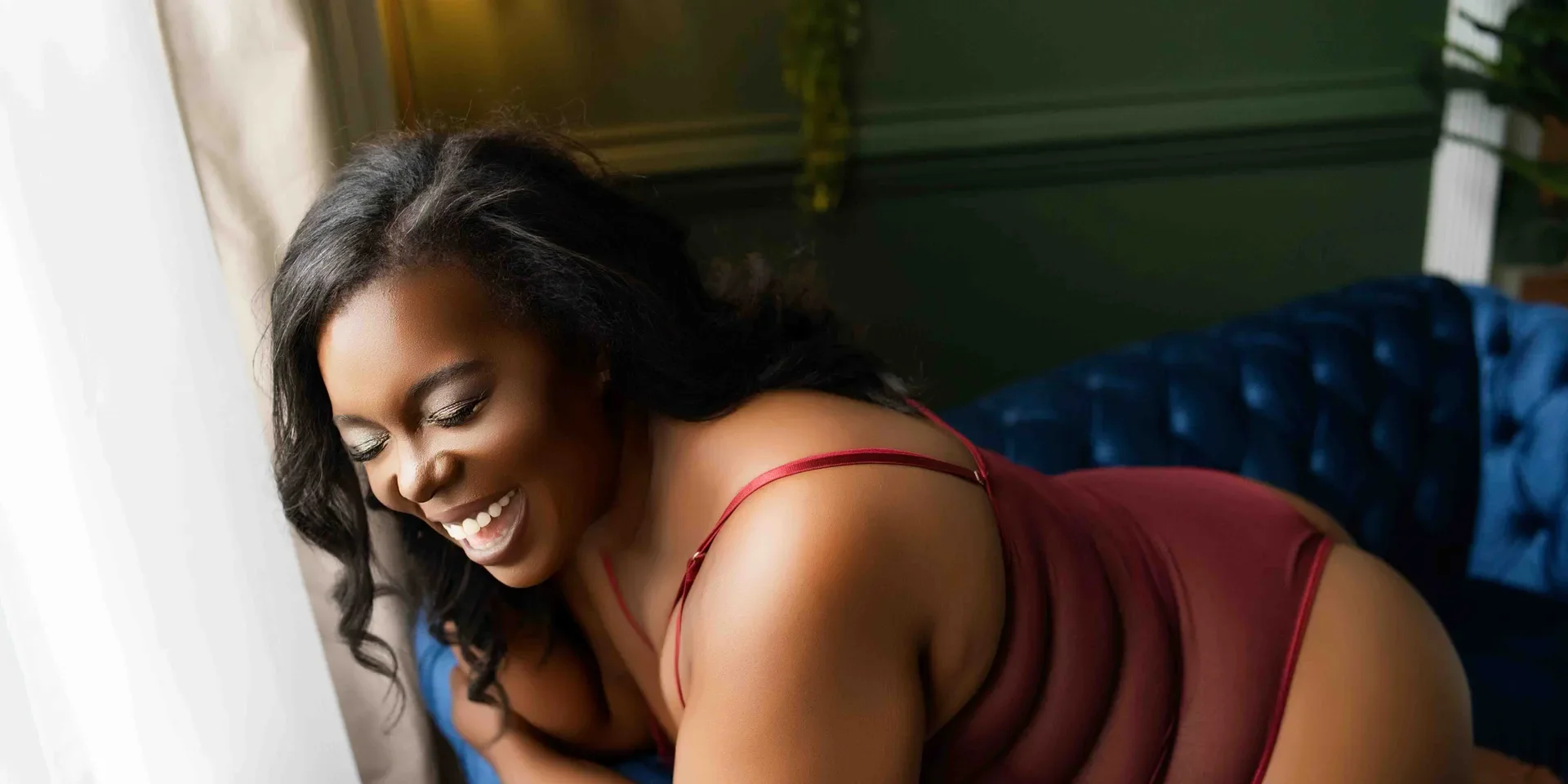
If you’re weighing boudoir photography vs portrait photography, begin with the purpose of the photographs and the kind of experience you want. Both center on people and can be personal, carefully styled portraits. Boudoir usually creates an intimate, expressive mood and a session planned around self-celebration. General portrait photography covers many aims, from a professional headshot to a family keepsake. The categories can overlap, so it helps to look beyond the label.
Schedule a no-pressure consultation by phone
What is the simplest difference between boudoir and portrait photography?
Portrait photography is the wider category. It includes photographs of one person or a group, made for many different reasons. A portrait might be a headshot for work, a family photograph, a senior milestone, a maternity image, a personal branding session, or simply a record of a particular season of life. The subject, purpose, location, wardrobe, and mood all shape the result.
Boudoir is a more specific portrait style and experience. It often uses considered styling, intimate settings, close composition, and deliberate posing to create personal, expressive images. Some people book around a wedding or milestone. Others want to mark a new chapter or do something meaningful for themselves. It does not have to be a gift for a partner.
There is no hard wall between the two. A boudoir photograph is a portrait, and a general portrait can feel intimate, relaxed, or expressive. A photographer may blend visual approaches when that suits your idea. Instead of assuming a label tells you everything, discuss the mood, clothing, posing, privacy, and finished pieces you have in mind.
Try asking yourself: “When I see these photographs later, what do I want them to bring back to mind?” If the answer is a work achievement, family chapter, or polished public profile, a general portrait session may be the direct fit. If you want self-expression, an intimate mood, and an experience planned around you, boudoir may be worth exploring. Neither choice is automatically more important or meaningful.
It can help to separate three things that are often bundled together in conversation: the subject, the visual style, and the client experience. The subject might be one person, a couple, or a family. The style might be bright and simple, softly lit, classic, or more expressive. The experience describes how the session is planned and guided. Two photographers can use the same label while offering very different approaches in all three areas.
How does the purpose shape the session?
Purpose is a useful starting point because it makes later choices easier. For a professional headshot, you might talk about your role, where the image will appear, and what impression feels appropriate. A family session may focus on relationships and shared moments. A milestone portrait could include a meaningful location, outfit, or keepsake. The goal narrows the decisions about setting and the images to make.
For boudoir, the reason can be broad and personal. You may be celebrating a birthday, preparing for a wedding, embracing a change in your life, or giving yourself permission to step in front of the camera. You do not need a dramatic story or a complete creative plan before you inquire. A conversation can help you describe what interests you, what feels uncertain, and what kind of result you hope to have.
Separate your reason for booking from the intended use of the photographs. You might book for yourself and choose an album as a gift. You might keep every image private. You may not know yet whether you want to display or share anything. Those are different decisions, and you can ask about them independently rather than feeling you need to settle everything at once.
Write down a few words about the feeling you want in the final images: classic, soft, confident, playful, quiet, or simple. You can collect examples that show lighting, composition, or wardrobe you like. Use references to explain your taste, not to set a standard you need to copy. The goal is not to recreate another person’s photograph or appearance.
A practical exercise is to finish this sentence: “I want photographs that…” You might say, “…look polished on my professional profile,” “…show our family together,” or “…help me remember this chapter with warmth.” Then note what would make the appointment itself feel worthwhile. Perhaps you want clear instruction, a relaxed pace, help planning outfits, or the freedom to make choices as you go. These answers can reveal whether you are comparing similar experiences or very different ones.
What changes in preparation and planning?
Preparation varies across portrait types. A headshot appointment may need a conversation about clothing, grooming, background, and final crop. A family shoot may involve coordinating schedules and outfits. A personal branding session might call for a list of settings or activities. Ask which decisions are expected in advance and which can be worked out with the photographer.
A boudoir experience may include more conversation about wardrobe, styling, privacy, and pace. At Tabetha Rae Photography, the described process includes a preliminary consultation about your vision, the experience, pricing, and products. The studio describes professional hair and makeup, wardrobe discussion, and guided posing. Planning is done with you, rather than treating posing as a skill you should already know.
Give yourself time to understand the full schedule. The studio recommends reserving six to eight weeks before finished artwork is needed and describes scheduling as far as 12 months ahead, subject to availability. If your date connects to a wedding or another event, ask how booking, the image-selection appointment, and product fulfillment fit together. Published time estimates are not guaranteed arrival dates.
Preparation does not mean you need to transform yourself or arrive with every choice settled. Start with practical matters: dates, travel, clothing, the help you want, and questions you are comfortable discussing. If you have a concern about movement, a garment, a boundary, or a pose, raise it before the session. A thoughtful plan can still leave room to change direction.
It can also help to name what you do not want. Perhaps you prefer to avoid a color, do not want a certain part of the room shown, or want to skip an idea that feels unlike you. Sharing those preferences gives the photographer a useful starting point. You do not owe anyone a detailed personal explanation for a boundary.
Ask how the photographer adapts if practical plans shift on the day. Weather, energy, timing, or a clothing choice may change the details. A flexible plan does not mean every request can be accommodated, but you should know which choices can move and which are fixed. For a milestone portrait, check that the location and schedule work for everyone attending.
Think about the full visit, not only the time the camera is in use. There may be arrival, styling, wardrobe changes, breaks, and conversation before or after photographs are made. The studio describes a visit of about three hours, with roughly 60 to 90 minutes of photography noted in its planner. Confirm current details during consultation; not every appointment necessarily follows an identical timetable.
For a standard portrait, ask whether you should arrive ready to be photographed or whether preparation support is part of the appointment. For boudoir, ask about the sequence from arrival through hair and makeup, getting dressed, photography, and wrapping up. Knowing the order can reduce uncertainty, especially if you have not had a professional portrait made before. Ask who will be present and whether a support person is permitted.
For any style, check what you need to bring and what the photographer supplies. Bring a short list of questions rather than trying to anticipate every possible moment. If you have a schedule constraint, say so early. If you prefer not to make decisions quickly, ask how much time is available for each choice. These small details can make the appointment feel more predictable.
How do wardrobe and styling compare?
Wardrobe should make sense for the purpose. For a work portrait, choose clothing that fits your professional setting and the way you plan to use the image. For a family session, coordinating colors may be more useful than matching every outfit. For a personal milestone, the right choice might be a favorite dress, a meaningful accessory, or something uncomplicated that keeps attention on your expression.
Boudoir wardrobe is personal, too. Some people choose lingerie or a bodysuit; others prefer a robe, shirt, sweater, or a different outfit that feels like them. The question is not whether a look follows a rule. It is whether you feel at ease wearing it and whether it supports the mood you want. Ask how fabrics, colors, and layers work with the setting and light.
Bring options only if that makes planning easier. A short list of outfits you already enjoy can be more useful than buying a new wardrobe under pressure. Ask whether to bring accessories, what changing space is available, and whether additional outfit options have conditions attached. At Tabetha Rae Photography, access to the client closet is conditional on collection prepayment, so ask for current details before planning around it.
Professional hair and makeup may be part of the boudoir experience, but ask what is included in the session you are considering. Discuss your preferences with the team. Explain what you usually wear, what you do not want changed, and whether you prefer a familiar look or something different. A styling conversation should help you feel prepared, not make you feel you need to become someone else.
For a portrait session, the photographer may have specific advice about patterns, colors, or how clothing reads against a background. Ask for examples rather than relying on broad rules. A pattern that works in one setting may compete with another. If the photograph will be cropped closely, the neckline and shoulders may matter more than the lower half of the outfit. If it will be a full-length image, think about shoes and how the outfit moves when you sit or stand.
For boudoir, comfort can matter as much as the visual idea. Try on each option before the session and notice whether it stays in place when you move. Consider whether you can sit, stand, or change position without constantly adjusting it. Bring only what feels appropriate to you. You can ask about layers and coverage without explaining why a particular option feels right.
It is useful to ask whether accessories, personal items, or meaningful clothing can be incorporated. A piece of jewelry, a robe, or a simple garment may add a personal detail without taking over the photograph. If you have a specific idea, describe it during planning. The photographer can tell you whether it fits the setting and how it might be included.
How are posing and direction different?
There is no single direction style for all portrait photography. Some photographers give clear instructions throughout. Others make a few adjustments and leave more room for natural interaction. A professional headshot may involve small changes to posture, chin angle, or gaze. A family session may use movement and conversation to create relaxed expressions. Ask how much guidance to expect and say if you prefer more or less.
Many people have little or no experience posing for a camera. That is a normal place to begin. In a guided boudoir session, the photographer can demonstrate positions, explain where to place your hands, and make adjustments as you go. You should not have to guess what the camera needs. You can ask to pause, try a variation, or move on if something does not feel right.
Direction is a collaboration. You can share what you hope to show, but you do not have to perform a version of confidence. A photograph can be quiet, bright, serious, playful, or somewhere between. The goal is not to force one expression onto every person. It is to help you find ways of standing, sitting, and moving that suit your comfort and the look you want.
If you are comparing photographers, look beyond a few dramatic portfolio images. Notice whether you can picture yourself in the approach. Does the work show varied expressions and people? Does the photographer explain how they guide someone who feels unsure? A consultation is a useful time to ask what happens if you feel awkward, need a break, or want to adjust a pose.
Consider whether you want to be directed throughout or prefer more room to move on your own. Neither preference is wrong, and it can be difficult to tell from a gallery alone. Ask the photographer to describe a typical prompt or explain how they work with someone who has never posed professionally. A clear example can tell you more than a general promise of comfort.
It is reasonable to ask how your preferences will be remembered. If you say you like one pose but not another, how will the photographer use that information? Can you revisit a choice as the session continues? You are allowed to respond honestly, and one decision does not lock you into repeating the same look for the rest of the appointment.
For a family or group portrait, direction may involve coordinating several people at once. Ask how the photographer makes space for different personalities, younger participants, or someone who dislikes being photographed. For a solo portrait, you may want a quieter pace and fewer people in the room. Confirm who will be present so there are no surprises.
Notice how the photographer communicates before you book. Do they answer practical questions plainly? Do they explain what happens next? Are you given time to consider the information? That exchange is part of the experience. Appealing images matter, but they are not a substitute for clear answers about the process.
What should you know about privacy and image use?
Privacy is worth discussing before any portrait session, especially when the photographs feel personal. Ask how images are stored, who may see them as part of the studio workflow, and what choices you have about public sharing. Do not rely on an assumption or a broad phrase such as “private session.” Ask for the photographer’s actual process and read the written agreement.
At Tabetha Rae Photography, clients have image-sharing choices, including the option to delay a release date. Promotional use depends on the client’s chosen and signed model release. Ask what each choice covers and make a decision that fits you. If you do not want images used for promotion, state that and confirm the choice in the applicable paperwork.
For any photographer, clarify whether social media, portfolio use, printed samples, or other marketing uses are covered by the same permission. Ask whether you can change a choice later and what process applies. You do not need to decide because someone else chose to share images. Your comfort is the relevant measure.
Also ask how the studio handles the appointment and image-selection steps. The studio describes a return appointment, roughly within a week, to view edited color and black-and-white photographs and choose artwork. Knowing when you will see images and how selections work helps you understand the experience before you commit.
Privacy includes the way you communicate and make decisions. Ask whether you will see images in person or through a secure viewing process, who helps with selections, and whether you can request private time to consider options. The studio’s described path includes an ordering appointment. If you want product prices and selection steps in advance, ask for the relevant information before the viewing appointment.
If the session is connected to a wedding or gift, consider how you will keep the finished item private until the right moment. Ask about packaging or delivery arrangements if they matter. If you intend to share photographs with a partner or family member, decide which images you want to share and how. Permission to purchase an image is not the same as permission for the studio to publish it.
For any kind of portrait, distinguish between the person who pays, the person photographed, and the person who may receive a print. These may be the same person, but not always. If someone else is paying, talk through who has a say in the photographs, image selection, and sharing choices. Clear expectations protect the subject’s comfort and help honor the session’s purpose.
How do you compare the finished photographs and artwork?
Different portrait goals call for different finished formats. A professional portrait may be delivered as a digital file sized for a profile or publication. Family photographs may become framed prints or an album. A personal portrait can be displayed, stored, or shared in whichever way suits you. Ask what formats are available, what is included, and whether you choose products after photographs are made.
Understand the difference between paying for a session and purchasing images or artwork. At Tabetha Rae Photography, the session or creation fee reserves and delivers the planned, styled, guided shoot and a later ordering appointment. Images, albums, collections, and other artwork are purchased separately. The fee alone does not include the photographs. Ask for a clear written explanation of the total investment structure and any minimum purchase or prepayment. Do not assume the session fee counts toward an artwork minimum unless the studio confirms that directly.
Ask to see examples of physical products if they interest you. The studio describes hand-bound albums and other artwork, along with collections and purchased digital images. Find out how you select photographs, how album customization works, what payment timing applies, and how fulfillment estimates are provided. Ask what happens if a product is custom or takes additional production time.
A simple comparison is to write down what each photographer says is included and what is selected or purchased later. Keep the categories separate: session time, styling, image selection, digital files, prints, albums, and delivery estimates. This avoids comparing one photographer’s session fee with another photographer’s finished collection as though both cover the same things.
Ask how you plan to use the finished photographs. If you want one image for a profile, check the file format and crop. If you hope to display an album, look at its size, cover options, and image arrangement. If you are choosing prints, ask which sizes are available and whether framing is part of the order. A product can look different in a sample than in a small online preview, so inspect examples when possible.
Be precise about what “digital images” means in the offer. Ask how many are included or available, whether purchased files are edited, what resolution or usage rights apply, and when delivery is expected. Do not assume a session fee includes every image or that a collection contains a particular set. Request the current product guide and ask about anything unclear.
Work backward from any date when you need a finished item. The studio recommends booking six to eight weeks ahead of the date finished artwork is needed. Its published delivery estimates describe digital purchases as often delivered the same day or within 48 hours after full payment, and physical artwork as commonly taking 15 to 20 days, with some custom products taking up to five weeks. These are estimates, not guarantees. Confirm current timing for the specific product and leave room for selection and production.
When comparing session options, write down the full sequence, not only the first payment. For example, list the reservation or creation fee, whether products are separate, when image choices happen, how any required prepayment works, and what delivery estimates apply. If a detail is unclear, ask for a written explanation. This helps you compare the experience fairly and plan within your own budget.
How can you choose the photography style that fits?
Start with the result you want, not what you think you are supposed to book. If you need a photograph for a work profile, an ordinary portrait session with a clear headshot plan may be enough. If you want a family record or milestone image, look for a photographer whose work and process fit that purpose. If you want an expressive, personal session with considered styling and guided posing, ask whether boudoir matches your idea.
Then consider the experience. Would you prefer a short, focused appointment or a longer guided session? Do you want help with wardrobe and posing? Are you comfortable with the setting and approach? Would you rather plan every detail or make choices together? The right answer depends on your preferences, not on which session sounds more impressive.
Look at a range of examples when available, rather than choosing from one favorite image. A portfolio can show how a photographer handles light, expression, styling, and different people. It cannot tell you everything about communication or privacy. Use it to identify questions, then talk directly with the photographer. You can also review Tabetha Rae Photography’s site for an introduction to the studio and its approach.
If you are in Central Arkansas and considering a guided boudoir experience, Tabetha Rae Photography is based in Cabot and describes serving the Central Arkansas area. A no-pressure consultation is a chance to discuss your ideas, the studio’s process, pricing, and next steps. You can ask questions without arriving with a final wardrobe or a fully mapped-out session plan.
When you compare two session types, make a short decision list rather than trying to rank them in the abstract. Note your reason for wanting photographs, the atmosphere you hope for, how much guidance you want, and how you might use final images. Mark which details are essential and which are flexible. For one person, a particular printed product may be central. For another, a calm, guided experience matters most.
Consider the setting, too. A studio, an in-home space, and an outdoor location each create a different feel and have practical needs. Ask where the session takes place, what the space looks like, and whether you can see examples made there. If you are comparing a headshot appointment with a longer personal portrait experience, setting and pace may differ as much as wardrobe.
Think about who is involved. A solo session gives the photographer room to focus on one person’s expressions and ideas. A family or couples portrait involves shared decisions and may need more coordination. The studio lists individual and couples session fees, but ask about the current process for the appointment you have in mind. Do not assume one session description covers another.
Trust the questions that come up as you review a photographer’s work. If you like the lighting but are unsure about posing, ask about direction. If you like the products but need clarity about cost, request current price information. If privacy is the deciding factor, make that the first subject of conversation. A good fit is about both the photographs and the way the photographer works with you.
What should you ask before booking?
A useful consultation gives you clear answers about the experience and decisions ahead. You might bring a short list like this:
What purpose and mood are we planning for, and how will you help me shape it?
What does the session fee cover, and which images, products, or artwork are purchased separately?
Is there a required prepayment or minimum artwork purchase? Does the session fee count toward it?
What styling, hair and makeup, wardrobe discussion, and posing direction are included?
Are client-closet options available, and what conditions apply?
How much time should I allow for the session, viewing appointment, and artwork selection?
What choices do I have about storing or sharing images, and how do I record them?
When should I book if I need finished artwork by a certain date?
What delivery estimates should I plan around, and which products may take longer?
What should I do if I feel nervous, need a pause, or want to change a pose or outfit?
Who will be present in the room, and may I bring a support person?
How are images viewed and selected, and can I take time before deciding what to order?
What is the cancellation or rescheduling policy, and where can I review it?
Are there decisions I need to make before the appointment, such as a release or payment plan?
Listen for direct answers. You should understand what you are paying for, what remains a separate choice, and how the photographer handles the parts that matter most to you. If an answer is unclear, ask for it in writing before reserving a date. Clarity at the beginning can make the decision feel more manageable.
It is fine to ask one question at a time and take notes. If you are comparing several photographers, use the same questions for each one. That makes it easier to notice practical differences without letting a single attractive image decide everything. You do not need to tell a photographer what another business charges; focus on understanding each experience on its own terms.
How can you prepare without overplanning?
Once you choose a session, keep preparation simple. Set aside time to answer the photographer’s planning questions, choose a few clothing possibilities, and note preferences or limits you want respected. You can bring a short inspiration list, but you do not need a complete script. Leave room for suggestions and for changing your mind.
Think about practical details. Confirm the date, location information, arrival time, payment schedule, and what to bring. If finished products are part of your plan, work backward from the date you need them and ask whether the schedule can accommodate it. Production and delivery estimates can vary by item, so get current guidance rather than relying on assumptions.
Give yourself permission to be new at this. You are not expected to arrive knowing how to pose or to feel completely relaxed in the first few minutes. You can say what you are unsure about and ask for direction one step at a time. A good plan should support the person in front of the camera, not ask her to meet an imaginary standard.
If you want to read about another style comparison before your consultation, see boudoir photography vs pinup photography. Different comparisons can help you put words to the look you like, but your own goals and comfort should guide the choice.
Schedule a no-pressure consultation by phone
In the end, choose the portrait experience that reflects your reason for being photographed and gives you the level of guidance, choice, and clarity you want. A thoughtful conversation before booking can help you decide whether boudoir, another portrait style, or a blend of the two is right for this moment.