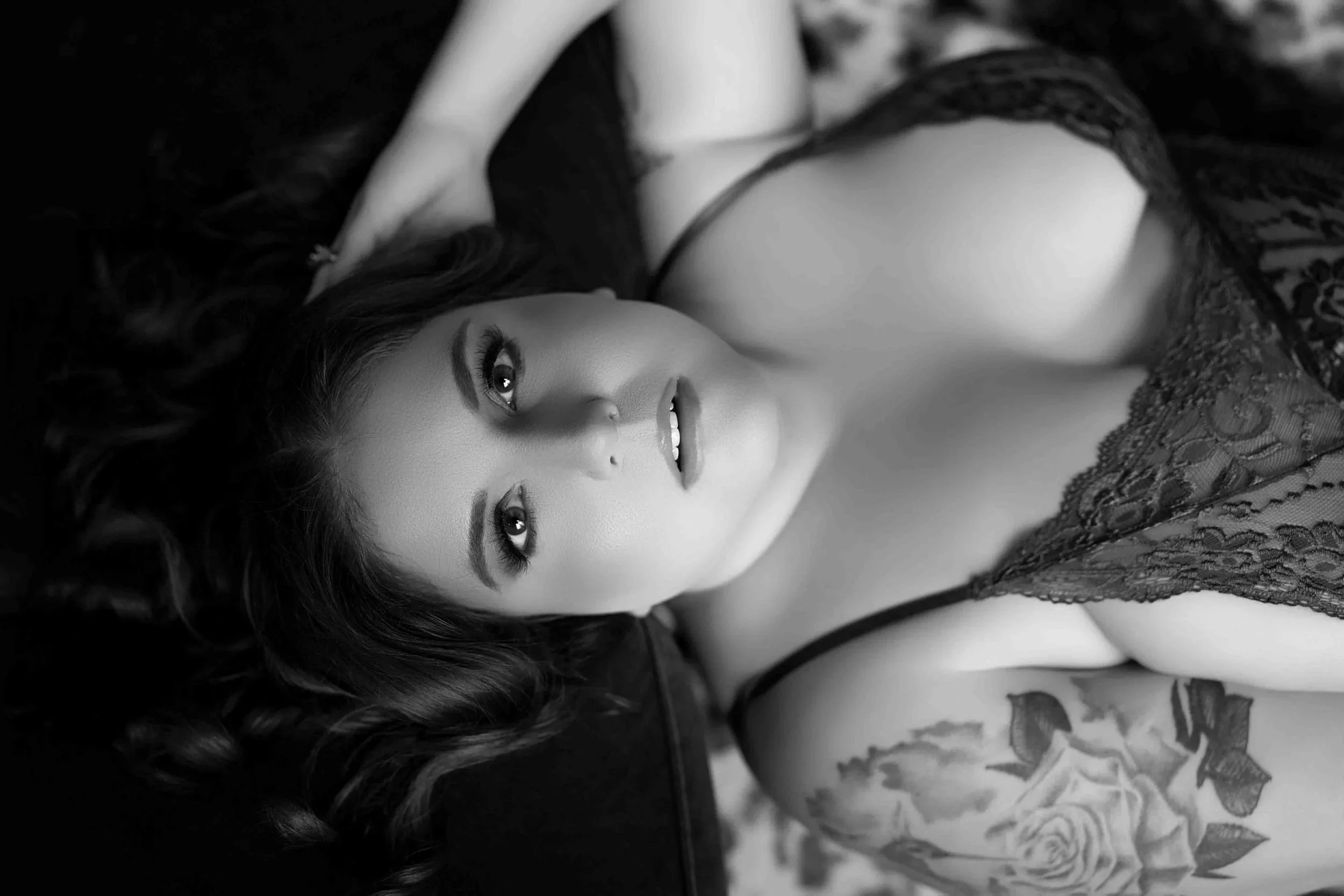
Boudoir photography for women with scars can be shaped around your choices, rather than someone else’s assumptions about how your body should look. You might want scars visible, softened by light, covered by clothing, or treated differently from one image to the next. You do not have to settle every decision before you arrive. Start with what would help you feel heard, and let the rest of the plan remain flexible.
Schedule a call to discuss your session
What would you like your portraits to express?
Before choosing outfits or poses, think about what you want to remember about the experience. There is no required message. Some women want a scar present in the photographs because it is part of their life. Others would rather have it outside the frame or less noticeable in some images. You may want a mix, or you may not know yet. Each is a useful place to begin.
Try writing down a few words about the feeling you want the photographs to have. Perhaps you want them to feel calm, playful, thoughtful, elegant, strong, or simply like you. Those words can guide decisions without turning the session into a performance or asking you to explain the history behind your scars.
It can also help to separate the idea of a portrait from the idea of a statement. A photograph does not have to explain what happened or stand for a lesson. It may be a personal keepsake, a record of this season, or an image you enjoy. You get to decide what it means, if anything.
What do I hope to see when I look at the finished photographs?
Are there places I prefer not to show, or not to show in close detail?
Would I like different photographs to handle visibility in different ways?
Are there movements, fabrics, or kinds of touch I would rather avoid?
Which choices do I want to make before the session, and which can wait?
Your answers can change. A plan gives you a starting point, not a contract with yourself to follow one direction. If your feelings shift during the session, it is fine to pause and try another idea. You can leave some questions open until you see how a pose, outfit, or lighting setup feels in practice.
How can you talk about boundaries before the session?
You do not owe anyone a medical history or detailed explanation. Share practical information that helps shape the photography. You might say, “I’m comfortable showing this area, but I don’t want close-up images,” or, “Please ask before adjusting clothing near this spot.” You can also say that you are unsure and want to decide after seeing a pose or lighting setup.
During a consultation, share only what you want the photographer to know. Mention if a scar is sensitive, a position feels uncomfortable, or there are visual choices you would like to consider. If you prefer to keep the conversation focused on images and boundaries, that is enough. You can describe a physical limitation without explaining its cause.
It may help to separate practical details from personal history. A photographer may need to know that a position causes discomfort or that you want to avoid pressure on an area. The reason a scar is there is yours to share or keep private. A brief note before the appointment, followed by a check-in on the day, may be all you want.
Useful phrases to keep ready
“I’d like to try this, but please check in before changing the pose.”
“Could we make this position more relaxed?”
“I want to see how this looks before deciding whether to continue.”
“Please don’t photograph that area today.”
“Can we take a short break?”
“I’m not ready to decide about that yet.”
If saying these things out loud feels difficult, write them down before the appointment. Bring a note or send a message ahead of time. The purpose is not to prepare a perfect script. It is to make your preferences easier to communicate when you have other things on your mind.
You might agree on a simple way to pause, such as saying “hold on” or asking to sit up and reset. A pause gives you a moment to check in with yourself, ask a question, and choose the next step. If you would rather stop, you can say that too. Consent for one pose or outfit does not mean you have agreed to every later direction.
How should you choose clothing and styling?
Wardrobe is a set of options, not a test. Choose pieces that feel good to wear and fit the photographs you have in mind. That might be a favorite robe, a soft shirt, a bodysuit, a sweater, or something else that feels like you. Bring more than one look if you want variety, but there is no need to build a large wardrobe just for the session.
Consider fabric, seams, and fit as well as appearance. Clothing that pulls, scratches, or presses on a sensitive area may distract you. If you are concerned an item will rub against a scar, try wearing it at home for a little while. Layers that are easy to adjust can give you more control over how much is shown.
Some women like clothing that frames a scar without covering it. Others prefer a garment that keeps it out of view. Neither choice makes the photographs more or less honest. Ask during the consultation how wardrobe planning works and what options are currently available. Closet access is conditional on collection prepayment, so confirm current terms rather than assuming it is part of every session.
Make a short wardrobe plan
Choose one outfit that feels familiar and comfortable.
Add another option only if it supports a different look you genuinely want.
Check how each piece feels when you sit, stand, and gently reach.
Bring a robe or another layer if it helps you feel settled between looks.
Decide whether you want to change privately and how you would like help, if any.
Professional hair and makeup are described as part of the studio experience. If you have preferences about products or areas you do not want touched, mention them before the session. Ask what is involved and choose what feels right. You do not need to use every styling option.
Rather than plan a fixed progression in coverage, bring a small range of possibilities if that feels useful. One outfit might stay on throughout. Another could show a different amount of skin, but you are not obliged to wear it. Keep options available and decide when you have more information.
If an outfit leaves a mark on your skin or requires help to adjust, make a note of that when planning. You can choose an item that is easier to put on and take off, or ask what changing arrangements are available. A practical outfit is not less beautiful or meaningful than a complicated one. The best choice is one that lets you focus on the images you want.
Can posing make the photographs feel more comfortable?
Posing does not need to hide your body or make you hold an unnatural position. Small changes can affect how an image feels: turning slightly toward or away from the camera, shifting an arm, changing your gaze, or sitting instead of standing. Try a direction, look at the result if you wish, and decide whether to continue.
If a position puts pressure on a sensitive area or makes you feel exposed, say so. The pose can be adjusted, replaced, or skipped. You do not need to push through a movement to prove anything. Guided posing should leave room for feedback and allow you to take part in decisions.
Think in terms of preferences rather than rules. Instead of “I need to hide this,” you could say, “I prefer a wider frame here,” or, “I’d like my arm to rest in a different place.” That gives the photographer useful direction while keeping the focus on the image you want.
Try a gradual approach if it suits you
If you are uncertain about how much you want to show, begin with an outfit or pose that feels more covered. Decide whether to change after you have had time to settle in. You can make a few photographs in one direction and then shift to another. There is no obligation to keep increasing how much skin is visible.
Some people prefer to begin seated because it feels grounded and easy to adjust. Others feel more at ease standing, leaning, or using a chair for support. Consider what movements feel comfortable, but do not treat that as a strict limit. Ask what a pose involves, then decide whether to try it.
You may want to agree on check-ins between outfits or lighting changes. A brief question can give you an opening to ask for an adjustment. If you prefer to offer feedback when ready, say that too. You can change your mind about how often you want to be asked.
Ask whether you can review a few images during the session. A preview may help you make choices, but only if it feels useful. If you would rather wait until the later image reveal, explain that preference. You can also decide not to look at previews. Ask what is possible before the session rather than assuming how the day will work.
What can lighting and framing change?
Light and camera angle shape the mood and the visible detail in a portrait. Soft natural light, a turn of the body, or a wider frame may make a scar less prominent in one image. Another setup may show more texture and detail. These are creative choices, and you can talk about what you prefer without labeling any version as correct.
Describe the result you want rather than prescribing a technical setup. You could say, “I’d like this to feel gentle,” “I want the scar included but not centered,” or, “I’m curious how this looks in softer light.” A photographer can discuss possible approaches. Light changes what appears in a photograph, but no setup can guarantee a particular reaction or erase the meaning you attach to it.
Framing matters too. A close portrait can draw attention to a face or detail; a wider composition can place a pose in context. Cropping is another choice to discuss when selecting images. A portrait can work for you even if it does not show every part of your body.
You might ask for two approaches to the same idea. Perhaps you want one image framed broadly and another with the scar visible in the composition. You do not need a permanent decision about how a scar should appear across the gallery. Different photographs can serve different purposes.
Editing is worth discussing before booking. You may want a scar represented as it appears, or want to ask about limited adjustments in particular images. Do not assume what routine editing includes. Ask what changes are possible, what falls outside the photographer’s process, and whether your preferences can be noted for the reveal. Be clear about whether you mean light, color, or retouching.
It may help to describe the image rather than use a broad request like “make it look better.” For example, you might ask whether a little more distance from the camera would change the composition, or whether a different light angle is possible. Concrete questions are easier to discuss. The photographer can explain what is achievable and you can choose whether that approach fits.
How do you make privacy and image sharing part of the plan?
Privacy is not a small detail. Ask how photographs are stored, who may see them as part of the business process, and what choices you have about marketing use. The studio describes different release choices, including an option to delay a release date. Confirm current choices and wording directly before signing. Image use in marketing requires the client’s chosen release.
Decide what you are comfortable authorizing, if anything. Ask whether a release can be limited to certain images or channels, how to change a choice before signing, and whether declining marketing use affects your session. Do not sign a form you do not understand. Take time to read it and ask for clarification. You can choose not to authorize public use.
Separate who handles images from whether images can be shown publicly. Ask who may access photographs during the studio’s normal process, how files are kept, and what the release covers. A clear answer helps you decide based on current policy rather than assumptions. Ask for unclear language to be explained in everyday terms.
Also ask how the image reveal works and who will be present. The studio describes a later ordering appointment where edited images are shown for selection. Ask whether you can view images privately and make choices at your own pace. If you want a support person present, ask whether that is possible under the current process.
Think about your own handling of the finished photographs too. If you choose digital images, consider where you will store them and who can access the device or account. If you choose printed artwork, decide where it will be kept or displayed. These are personal considerations, not requirements, and you can choose the approach that suits your life.
What should you ask before booking?
A consultation is a chance to discuss your vision, the experience, pricing and products, and next steps. You do not need every detail decided. A few questions can help you understand whether the session structure fits. Take notes, ask for current written information, and give yourself time to think. You can read about the studio’s boudoir experience before making a list for your call.
How do you plan poses with someone who has areas she prefers to protect or avoid?
Can I decide during the session whether a scar is visible in a particular image?
What happens if a pose or garment feels uncomfortable?
Can I request particular lighting, framing, or editing preferences?
What are the current privacy and image-release choices?
How does the later image-selection appointment work?
What is included in the session fee, and what images or artwork are purchased separately?
What are the current prepayment requirements and product starting prices?
How far ahead should I book if I need finished artwork by a particular date?
The questions about cost matter because the session fee and finished photographs are separate parts of the experience. Published information describes images, albums, collections, and other artwork as separate purchases, and a prepayment plan toward a minimum. Ask for current written details, including whether the session fee counts toward that minimum. Do not treat a starting price or session fee as an all-in total.
Timing is worth discussing early. The studio recommends booking six to eight weeks before finished artwork is needed and describes scheduling as far as twelve months ahead, subject to availability. If planning around a wedding or another date, ask about the current schedule and product timelines. Delivery estimates are not guarantees, so leave room where you can.
Ask about the steps from consultation to finished artwork. Clarify when the session is reserved, what preparation information you receive, when image selection happens, and when products are expected after purchase. Ask which dates are estimates and which are firm commitments. You can revisit the studio’s blog articles about planning a boudoir session when you want to think through related questions.
How can you compare session options clearly?
When comparing photographers or session formats, focus on what is included and how decisions are handled. A session fee alone does not tell you what finished images cost, what products are available, or what guidance is provided. Ask each provider the same practical questions so you can compare the whole experience rather than one number.
Does the fee cover the photography session only, or does it include selected images?
Are artwork and digital photographs priced separately?
What is the minimum prepayment requirement, if any?
How are posing and wardrobe choices discussed?
What is the process for requesting a pause or changing a pose?
What release choices are offered for public image use?
When do you view edited photographs, and how do you place an order?
Write down the answers. If something is described verbally, ask where to find current terms in writing. One photographer might include products in a package, while another separates the session fee from image purchases. Those arrangements are not directly comparable until you understand what each amount covers.
Consider how you want to make choices during the shoot. Some people prefer a detailed plan; others want broad boundaries and room to decide in the moment. Explain which approach feels better and ask how the photographer incorporates client feedback. The goal is to understand whether you will have a clear voice in the process.
It can be useful to put your priorities in order. For example, you may care most about privacy and being able to adjust poses, then consider styling and product choices. Someone else may want to begin with the artwork options or timing. Your list helps you compare what matters to you rather than trying to use another person’s priorities.
How can you prepare without overplanning?
Preparation should make the day easier, not create another list to worry about. Keep a simple note with boundaries, clothing ideas, and questions. Send it ahead or bring it with you. The photographer does not need a polished explanation. A few practical reminders are enough.
A useful note might have three headings: “comfortable,” “not for me,” and “not sure yet.” Under comfortable, write a pose or outfit you are open to trying. Under not for me, include a movement, area, or kind of image you want to avoid. Under not sure yet, list things you want to decide after seeing the setup. This makes clear that uncertainty is a real answer.
In the days before the session, choose clothing that feels good and set aside anything you want to bring. Follow preparation instructions from the studio, and ask if something is unclear. Avoid last-minute changes because you think you need to look a certain way. The photographs are being made of you as you are, not of a checklist.
On the day, give yourself permission to arrive with mixed feelings. You can be interested and nervous at the same time. Ask for a moment to settle in, confirm your boundaries, and revisit the plan before beginning. If an idea no longer feels right, change direction. Make one decision at a time.
It can help to choose a signal for uncertainty as well as stopping. “Can we pause?” can mean you need a moment, while “I don’t want to continue with this” makes a clear boundary. You can ask for a pause or end an idea without justifying your choice.
A one-page preparation note
Write down one or two visual ideas you are curious about.
Name any areas or movements you want the photographer to avoid.
Note any touch or clothing adjustments that require a check-in first.
List what you are undecided about and want to assess on the day.
Add questions about privacy, editing, timing, and product choices.
Keep the note short enough that you can use it easily. You can give the photographer just the information that is relevant to the session. If your preferences change later, update the note or say so. It is a prompt for conversation, not a binding agreement.
What happens after the session?
The studio describes a return appointment roughly within a week to view edited color and black-and-white images and make selections. Ask whether the timing is current when you book. Use the appointment to choose photographs that reflect what you wanted, including different approaches to visibility and framing.
There is no need to select an image because it looks dramatic or someone else prefers it. Notice what you respond to. You might choose a portrait where a scar is visible, one where it is not the focus, or neither. Ask what each album, collection, print, or digital option includes and costs before deciding.
Give yourself a process for reviewing the gallery. First, set aside images that feel good to look at. Then consider which ones match the words you wrote before the session. You can make a group of photographs you are unsure about and return to them later, if the appointment allows. This is simply a way to choose images that suit your preferences.
If a particular image surprises you, you do not have to decide immediately what it means. Ask whether a crop, selection, or other available adjustment would change your response. If not, set it aside. Choosing fewer photographs that feel right to you can be better than selecting an image because you think you should like it.
Finished photographs can be meaningful without being shared publicly. Keep your copies private if that is what you prefer. If you authorize a marketing release, make sure the selection and permissions are clear. Your choice about public use belongs to you.
How can you make decisions one photograph at a time?
It may feel easier to decide about a single photograph than to settle whether your scars should be visible. Break the decision into smaller parts: outfit, pose, distance from the camera, lighting, and whether you want to keep the image. Each choice can be considered separately. Agreeing to one does not mean agreeing to all the others.
For example, imagine you want to wear a soft shirt that covers most of a scar but are curious about one image with a different frame. Begin in the shirt, try a seated pose, and ask for a wider composition. Afterward, decide whether to try another outfit. You are not required to move from covered to uncovered or build a sequence that tells a particular story.
Another person might want the scar included but not emphasized. Discuss concrete terms: avoid a close crop, keep the scar away from the center, or use a natural pose rather than directing attention to one area. Those are image-making choices, not judgments about whether the scar belongs in the portrait.
If you are comfortable with a scar visible in one outfit but not another, say that plainly. Your preference can be specific to the image, and you do not need to explain why. You can also decide that visibility is not something you want to plan at all. The photographer can work from the boundaries and ideas you choose to share.
A simple decision check-in
Notice whether the outfit or pose is physically comfortable.
Ask whether you want to see a preview or continue without one.
Describe one specific change that might help, such as more distance, another arm position, or a wider frame.
Choose whether to try the revision, return to a familiar option, or stop that direction.
Make the next choice independently. You do not have to keep an earlier decision.
This check-in makes room for comfort, curiosity, and changing preferences. If the photographer offers direction, ask what the composition is intended to show before deciding whether to try it.
What if your feelings change during the session?
You may arrive with a clear idea and discover that an outfit feels different on the day. You may also begin unsure and become curious about an option you had not considered. Either change is allowed. Your original plan is a starting point, not a promise.
Consider how you would like the photographer to check in. Some clients appreciate a brief question between looks. Others prefer to offer feedback when ready. You can say, “Please ask before we change direction,” or, “I’ll tell you if I need a pause.”
If you feel unsettled, name the immediate need rather than explaining the whole feeling. You might need to sit, get a drink, adjust clothing, or take a few minutes away from the camera. A small reset can help you decide whether to continue, but you are never required to resume a particular idea.
It is fine to finish earlier than planned if you no longer want to continue. Ask about current policies and the session process before booking, so you understand practical terms in advance. Your comfort determines whether a pose or direction is right for you.
There may also be moments when you are unsure but do not want to stop completely. You can ask to repeat a familiar pose, change the music or lighting if available, or take a moment before deciding. Keep requests tied to what would help right then. You do not have to make a permanent decision about the rest of the session.
How can you keep expectations realistic?
A portrait session can create images that reflect choices about clothing, light, framing, and styling. It cannot determine how you will feel afterward, and no photographer can promise a particular emotional result. You may feel pleased, thoughtful, uncertain, or several things at once. There is no one reaction you are supposed to have.
A photograph does not have to prove that you have accepted every part of your body. It can simply be an image you like, a record of a season, or a private keepsake. You do not need to turn the session into a personal test or explain what your scars mean.
Distinguish an artistic preference from a promise. Saying that you would like soft light or a wider frame gives the photographer a direction to explore. It does not guarantee a particular appearance in every image. If a specific result matters, ask how the photographer might approach it and what limits to expect.
Consider what success means in practical terms. Perhaps you want to feel listened to, have the option to change your mind, or leave with images that represent different preferences. You can assess the experience by whether your questions were answered and choices respected, rather than by whether you felt a particular way at every moment.
How can you make a consultation useful?
You can make the first conversation practical and personal without preparing a long explanation. Start with the parts that affect the images: what you are curious about, what you do not want photographed, and anything that changes how a pose or garment feels. If you are not ready to talk about a particular scar, you can say so and move to another question. You can also ask the photographer to describe the process before you decide whether it feels like a fit.
It may help to bring three kinds of questions. First, ask about choices during the session: how posing is guided, whether you can pause, and how to change direction. Second, ask about the finished images: when you will see them, what options exist for editing, and how you choose the photographs or artwork you want. Third, ask about privacy: who may see images as part of the normal process and what a release allows. Written answers make it easier to revisit details later.
Notice how the conversation feels, not only what information you receive. Do you have time to finish a thought? Are your preferences treated as useful direction? Can the photographer explain what is possible without promising a specific emotional or visual result? These observations can help you decide whether the process suits you. You are allowed to take time after the call rather than choosing a date immediately.
If cost is part of your decision, ask for the current information in a form you can review. Separate the session or creation fee from selected photographs and finished products. Ask what any required prepayment plan covers, when payments are due, and whether the fee is included in a stated minimum. Do not rely on a single starting figure to estimate the total. Understanding each part lets you decide what fits your plans without guessing.
Before ending the conversation, repeat the points that matter most to you. For example: “I want to start in a robe, avoid close framing of this area, and decide about other looks on the day.” Ask whether those preferences can be noted for the session. This short recap can catch misunderstandings and gives you a clear starting point if you choose to book.
Is this kind of session right for you?
You do not need to feel fully confident or have a particular reason to book. You may be marking a milestone, preparing for a wedding, embracing a new chapter, or making time for yourself. You do not need to frame the session as a way to overcome anything. It can be a creative portrait experience, with choices about how you are photographed.
It is reasonable to decide the timing is not right. You might want more information, more time to think, or a different kind of portrait experience. You do not need to reach a particular conclusion about your scars before booking. Understand the process, know what boundaries matter to you, and decide whether the experience fits.
The right plan is one where your boundaries are heard, your questions receive clear answers, and you understand costs and image sharing before you commit. Take time to compare the experience with what you want. If concerns are not addressed in a consultation, it is okay to wait or choose another option.
Talk through your session ideas
A scar can be part of your story without needing to define the photographs. Your session can make room for your preferences, comfort, and the way you want to remember this moment.