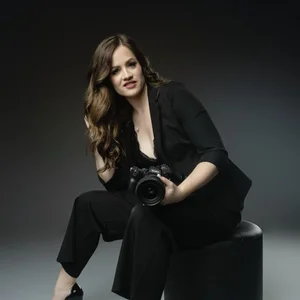
A boudoir photography portfolio can tell you much more than which portraits a photographer likes best. Look at several sessions and notice how the light, posing, direction, and finished images come together. Also consider whether the people pictured seem represented with care. A few striking photographs may catch your attention, but a closer review helps you understand the photographer's visual approach and what you still need to ask.
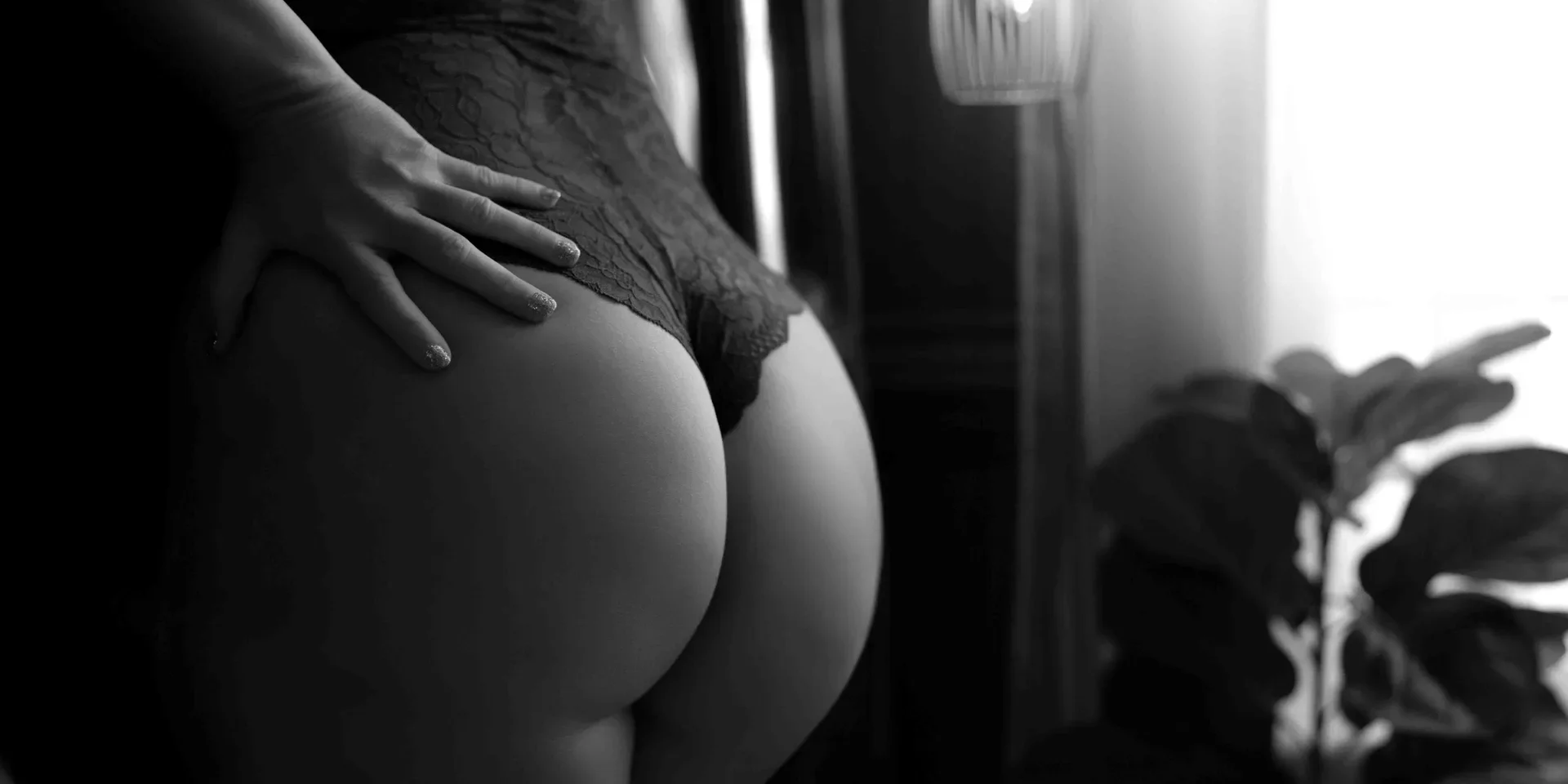
What should a portfolio help you understand?
Start with the real question behind your search. You are not looking for someone whose clients all look or pose exactly alike. You are trying to decide whether the photographer's style feels right for you, whether the person can guide a session, and whether there is room for your own preferences. A portfolio is one part of that decision. The conversation about process, privacy, and artwork matters too.
A portfolio is a selected collection, not a promise that your photographs will match any one image. Light, the room, wardrobe, comfort, direction, and personal taste all shape the result. Use the work as evidence of a photographer's general approach, then ask how that approach can be adapted to your ideas and boundaries.
As you browse, notice several things rather than looking only at the most dramatic portrait:
Consistency: Does the work feel considered across different sessions?
Range: Are there different expressions, compositions, poses, and moods?
Lighting: Does the light support the image, and does the finish appeal to you?
Direction: Do poses look intentional, and can you imagine receiving clear guidance?
Representation: Does the selection show people with different bodies, ages, skin tones, and styles?
Privacy and artwork: Can you find out how image sharing works and see examples of finished products?
This is not a scorecard where every photographer must make the same kind of image. It is a set of prompts for noticing what matters to you. A portfolio may look beautiful at first glance and still leave important questions unanswered. That is a reason to ask, not a reason to guess.
It can help to separate visual fit from practical fit. Visual fit is the look and feeling of the photographs. Practical fit includes how the photographer plans the session, how you receive direction, what you purchase, and what choices you have about public sharing. Make notes in both groups. Someone may make images you admire but have a process that does not suit your needs, or offer a process that sounds thoughtful while the visual style is not what you want.
How can you judge consistency without expecting every image to match?
Consistency does not mean repetition. It means there is care in the choices behind the photographs, even when the setting, wardrobe, or subject changes. One session may feel soft and quiet, while another is more playful or dramatic. The thread might be thoughtful light, attentive posing, balanced composition, or a polished finish.
Browse several images in a row, then look at work from more than one session if it is available. Ask whether the photographs feel like they belong to the same photographer's body of work. Notice whether the editing shifts so sharply from one image to the next that you cannot tell what the usual style is. A photographer may show both color and black-and-white work, for example, while still using a recognizable approach to composition and direction.
Pay attention to details that are easy to miss when you focus only on a face or outfit. Do backgrounds draw your attention away from the subject? Do highlights and shadows feel intentional? Are hands, shoulders, and posture handled with care? Does the color treatment suit the mood, or does it seem to change without a clear reason? You do not need technical terms. Simply notice whether the photographs feel coherent and finished to you.
Look for more than one hero portrait from a session. A sequence might include a wide composition, a closer portrait, a quieter expression, and a change in pose. That sequence can show how a photographer creates variety while keeping the session connected. If every public image has a similar crop and expression, you may want to ask how much visual variety is typical and how choices are made during planning.
Do not treat a portfolio as proof that every session follows one fixed recipe. A photographer may use natural light, studio lighting, different rooms, or a mix of methods. Ask which choices can change and which elements are central to the photographer's work. If you love a particular image, explain what appeals to you: perhaps the gentle light, simple background, or relaxed expression. Specific observations give the photographer something useful to respond to.
What does range look like in a boudoir photography portfolio?
Range is about more than changing outfits. It can mean different poses, distances, expressions, backgrounds, and levels of contrast. It may also show that a photographer can make an image feel calm, bright, intimate, playful, or strong without losing a sense of intention. Range gives you a better picture of the photographer's visual vocabulary.
Consider whether the portfolio offers images that seem to come from a complete experience. A handful of nearly identical poses tells you less than a set that moves naturally through different compositions. Look for close portraits and wider frames, seated and standing positions, and images where the subject looks toward the camera as well as away from it. These are clues about the kinds of decisions the photographer makes.
At the same time, do not mistake variety for a requirement to do everything. You are allowed to prefer a small number of looks. A session does not need to include every pose or mood shown in a portfolio. The useful question is whether the photographer can help you identify what you like and make a plan that feels personal. If you prefer a quiet, simple set of portraits, say so rather than assuming that you must match the most elaborate images online.
Try making a short inspiration list while you browse. Instead of saving an image only because you like the person's appearance, name the feature you respond to.
You might like the window light and the simple background.
The portrait may feel relaxed rather than highly posed.
You might like the close framing and the quiet expression.
The clothing may feel elegant and still like something you might choose.
You might like how the photographer uses shadow without losing detail.
This turns a general reaction into a conversation. It also keeps the focus on choices that can be adapted, rather than asking to reproduce another client's exact photograph. A saved example can communicate a mood or composition, but it does not have to become a template you follow.
How should you look at lighting?
Lighting shapes mood, texture, and emphasis. A bright image can feel open and airy. Soft directional light may create gentle dimension. Deeper shadows can give a portrait a more dramatic mood. None of these approaches is automatically better. Ask whether the light serves the photograph and the feeling you want.
Look at how light falls across the face and body. Does it feel deliberate? Are details visible where you expect them to be? Is there a balance between highlights and shadow that feels pleasing to you? Consider whether the background and subject are separated clearly enough, and whether the room's features seem to be used thoughtfully. You do not need to know the technical setup to notice whether the finished image works for you.
Lighting can change with the location and time of day. A portfolio image is not a promise that the same window, weather, or exact effect will be available at your session. It does help you see how the photographer tends to work with light. Ask how the setting influences the look and what happens if the light is different than expected. A clear explanation can show whether the photographer has a considered plan rather than relying on one exact condition.
Color and black-and-white photographs can reveal different aspects of the work. In color, notice whether skin tones and wardrobe look natural to your eye. In black and white, notice how contrast and tonal detail shape the image. Some photographs may suit one treatment more than the other. Ask how you will view the images and make selections if both treatments are part of the experience.
Also consider whether lighting appears to support a range of people and styles. One image may use soft light across a face, while another may use stronger contrast. Your preference could depend on the mood, clothing, background, or the way the photograph will be displayed. Rather than naming a lighting technique, describe what you like in ordinary terms. You might say you prefer a softer look, more shadow, or a simple background.
What can poses tell you about the photographer's direction?
Posing can show whether the photographer notices small details and creates images with intention. Look beyond whether a pose is dramatic. Notice whether the subject's hands, shoulders, head, and posture appear thoughtfully placed. Do the poses feel varied? Do they seem comfortable enough to hold, or do they look highly stylized? Your reaction is useful, even if you cannot explain the mechanics.
Most people do not arrive knowing how to pose for a camera. A portfolio shows the photographer's results, but it cannot tell you exactly how much direction you will receive. Ask whether the photographer demonstrates poses, gives small adjustments as you go, and helps with expressions and hand placement. A clear answer matters more than assuming you need to know what to do already.
Also consider whether the work includes a range of body positions and camera angles. A photographer may use standing, seated, or reclining poses, but you should be able to discuss what feels comfortable for you. If you have a movement limitation, an area you prefer not to emphasize, or a pose you would rather avoid, raise it during planning. Direction should leave room for your boundaries.
Try a simple viewing exercise. Choose three images and write down what you see in the direction. Is the subject looking toward the lens? Is the pose relaxed or structured? What does the angle do to the composition? Then ask how the photographer guides someone who is new to being photographed. You are looking for a process that sounds clear and responsive, not an expectation that you must perform perfectly.
A portfolio cannot show every conversation that happened during a session. It cannot tell you whether someone was nervous at first, how much coaching they received, or whether a pose was adjusted. Treat the images as a starting point for specific questions. For example: “I like the posture in this picture. How would you guide me into something similar?” Or: “I like this mood, but I would want a less structured pose. Can we talk about options?”
Does the portfolio represent people like you?
Representation is a practical consideration. The people in a portfolio can give you clues about whose experiences are visible, but a limited selection cannot tell you everything about a photographer's practice. Notice whether the work includes a variety of ages, body types, skin tones, and personal styles. Consider whether the photographs feel respectful and individual rather than relying on one narrow idea of how a subject should look.
You may not see someone who looks exactly like you, and that does not automatically mean the photographer cannot work with you. A portfolio is curated and may show only a portion of the people photographed. It is fair to ask whether the photographer has experience adapting direction, wardrobe planning, and lighting to different people. You can also ask whether there are examples they can share with permission that speak to a concern you have.
Look at expression and presence, not only styling. Do the subjects seem to have room to be themselves? Does the work make space for softness, confidence, humor, or a more reserved mood? There is no single correct expression. The point is to see whether the portfolio offers more than one kind of person or one repeated performance.
For Tabetha Rae Photography, the described experience is inclusive and intended for adult women across body types and backgrounds in Central Arkansas. Professional hair and makeup and guided posing are part of the published experience. Those are details to discuss in a consultation, where you can explain what you hope for and what would help you feel at ease. Do not assume that one portfolio image represents every possible session or that you need to arrive with a fully formed plan.
Representation also includes the way images are selected and presented. Ask whether the photographer's public examples reflect a range of client choices and whether those choices are respected. A polished portfolio may have a consistent style while still showing people as individuals. If you have a specific concern about wardrobe, posing, or how you would like to be presented, say what you need to know before reserving a session.
How can you evaluate privacy and image sharing?
A public portfolio contains photographs selected for sharing, but that does not mean every client's images are used publicly. The important question is how your own choice is handled. Before booking, ask what options you have for image sharing, whether a release is requested, and whether you can choose not to have photographs used in promotion.
Read the photographer's current terms and ask for clarification if any part is unclear. Find out when you make the choice, how it is recorded, and whether there is an option to delay a release. Ask who may see your images during selection and ordering, and how the studio handles photographs you do not choose. A portfolio page does not answer these practical questions by itself.
For this studio, the published FAQ describes choices about marketing-image release, including a delayed release option, and the written policy conditions promotional use on a signed model release. Confirm the current process directly before your session. A clear conversation can help you make a decision that feels comfortable without asking you to share more than you want.
Privacy should be part of the decision from the beginning, not a detail you are expected to sort out after the photographs are made. It is reasonable to ask about access, storage, and the studio's release process. If an explanation feels vague, ask a more specific question or take time to review the policy before deciding. You can also ask how your choices are noted so you know what you are agreeing to.
What should you look for in finished artwork?
A portfolio of digital images cannot always show what a printed album or wall piece looks and feels like in person. If finished artwork matters to you, ask to see product samples or a clear presentation of the options. Look at paper, cover choices, print finish, binding, and how photographs are sequenced. An album is not just a collection of images; its design affects how the photographs live together as a keepsake.
Ask how image selection works. Will you review edited photographs at a separate ordering appointment? Can you choose the photographs and the layout? What products are available, and how are they priced? These questions help you understand the route from the session to a finished item. Do not infer that a session fee includes photographs or artwork unless the current written information says so.
At Tabetha Rae Photography, the described process includes a later viewing and ordering appointment. Selected images, albums, collections, and other artwork are purchased separately from the session fee. Published starting prices and minimums can change, so ask for the current investment guide and confirm how the session fee and artwork minimum are treated. The available information does not establish that the session fee counts toward the stated minimum, so do not assume an all-in total from one number.
Timing is another useful question. If you need finished artwork for a particular date, ask how far in advance to schedule and how the studio's estimated production times apply to the products you are considering. The studio recommends planning several weeks before finished artwork is needed and describes delivery estimates, not guaranteed dates. Give yourself room for the session, image selection, design, and production.
When you view product examples, ask to see the way a complete piece is presented rather than relying only on a close-up of one cover. For an album, look at how images move from page to page and whether the design feels balanced. For a print or wall piece, ask about size and finish. For a digital purchase, ask what is included and how delivery works. The exact choices and terms should come from current studio information, not assumptions drawn from a photograph online.
How do you compare portfolios fairly?
Make a short list of what matters most before comparing photographers. For one person, it may be natural light and quiet portraits. For another, it may be a wide visual range, clear posing support, or crafted physical artwork. A useful comparison is about fit and process, not simply who has the most dramatic image.
| What to review | What to notice | Question to ask |
|---|---|---|
| Consistency | Connected visual choices across several sessions | How would you describe the style you return to most often? |
| Range | Different compositions, moods, poses, and styling | How can we shape a session around the images I like? |
| Direction | Intentional poses and varied expressions | How do you guide someone who has never done this before? |
| Representation | Individual images across varied people | How do you adapt lighting and direction to each person? |
| Privacy | Clear explanations of release choices | What choices do I have about public use of my photographs? |
| Artwork | Examples of printed products and presentation | What is purchased separately, and how does ordering work? |
Compare answers as carefully as images. Is the process explained in plain language? Can you ask questions without feeling pushed to decide immediately? Do the details about image use and artwork feel clear? A photographer's willingness to explain the experience is part of what you are evaluating.
Avoid comparing prices without comparing what each price covers. A reservation or creation fee may cover planning and the session, while photographs and products are purchased separately. Another photographer may structure those items differently. Ask for complete, current information and take time to understand the difference before comparing totals. A low entry amount does not tell you the final cost, and a product starting price does not tell you what is included in a particular option.
Pay attention to how each site explains the next step. A consultation can be a useful way to talk through your vision, experience, pricing, and questions without treating the conversation as a commitment. For the studio's published starting points, image-sharing information, and process, you can review Tabetha Rae Photography's website and ask for current details directly. Policies and prices can change, so confirm them before booking.
What should you bring to a consultation?
A consultation is a chance to describe what you want, hear how the experience works, and ask about investment and next steps. It does not commit you to booking. You can bring a few saved images or notes, but you do not need to arrive with a complete concept or wardrobe plan.
Before the conversation, sort saved examples into details you like and details you do not want. Naming the light or the calm expression is more helpful than asking to look exactly like someone else. You can also list practical preferences. Those might include clear posing guidance, a privacy talk before the session, or a certain kind of finished product. A short list gives the conversation a useful starting point.
Which parts of the portfolio best reflect your usual approach?
How do you help someone who feels nervous or unfamiliar with posing?
How do you plan around wardrobe preferences, comfort, and boundaries?
What is the current session fee, and what does it cover?
How are photographs, albums, collections, and other artwork purchased?
What is the current minimum or prepayment requirement, and how does it work?
What image-sharing choices are available, and when do I make that choice?
How does the viewing and ordering appointment work?
How much time should I allow if I need finished artwork by a particular date?
Write down answers that affect your decision. If you need time to think, take it. You should understand the basic experience, financial structure, privacy choices, and next step before you reserve a date. You can ask the photographer to clarify anything that sounds uncertain or to point you to the current written information.
There is no need to bring a large inspiration board. Three to five examples with notes about what you like can be enough to make your preferences clear. If you have no reference images, describe a feeling instead: soft, simple, classic, playful, or quiet. The point is not to arrive with the whole session planned. It is to give the photographer enough information to explain how the experience could fit you.
How can you tell whether a portfolio feels right for you?
After browsing, pause and ask what you actually responded to. Was it the light, the mood, the variety, the expressions, or the finished artwork? Is there enough information to imagine how the photographer would guide you? Do you have questions about representation or privacy that need a direct answer? These questions can help you move from general admiration to a decision based on your own priorities.
It is fine if your answer is not immediate. Save a few examples, note the details you like, and revisit them later. You might find that you are drawn to a consistent style, or that you want to see more range before choosing. You might also realize that the portfolio is beautiful but not aligned with the experience you want. That is useful information, not a failure to choose.
If you want to keep researching, the studio's blog and planning articles offer another place to learn about the experience. Use any article as a starting point, then confirm details that affect your own decision during a consultation. A clear, direct conversation is more useful than assuming every published example answers a question that matters to you.
Frequently asked questions about a boudoir photography portfolio
Some questions become clearer only after you have spent time with the portfolio. You may notice that you like the color but want simpler posing, or that the portraits appeal to you but you are unsure how image sharing works. Bring those questions forward. The goal is not to prove that you have analyzed every photograph. It is to learn whether the style and process leave room for your needs.
Can I ask for a look that differs from the examples?
Yes, you can describe what you like and ask what can be adapted. A photographer's portfolio shows the general approach, but wardrobe, expression, framing, and mood can be discussed. Ask how the photographer balances personal requests with their usual visual style. Do not assume that every reference can be recreated exactly, but do explain what detail matters to you.
What if I feel nervous about posing?
Ask what guidance is provided from the beginning of the session through each change in pose. You can ask how the photographer gives direction and how you can request an adjustment. You do not need to arrive knowing how to pose. The consultation is a good place to understand the support offered and to explain what would help you feel at ease.
Do portfolio photographs show what I will receive?
They show examples of finished work, not a guarantee of an identical result. Your setting, choices, and comfort will shape your own photographs. Ask what happens after the session, how you view and select images, and which finished products are available. Get current details about fees and purchases before you reserve a date.
How can I know whether my photographs will be shared publicly?
Ask about the release process and read the current policy. Find out what choices are available, when you make them, and how the studio records your preference. Public images in a portfolio do not answer what will happen with your photographs. Promotional use should follow the client's chosen release.
Should I choose a photographer based only on the portfolio?
No. The images matter, but you should also understand the planning, direction, privacy choices, purchase structure, and finished artwork. A consultation can help you fill in what a website cannot show. Take the time you need to compare the visual work and the process together.
Reviewing a boudoir photography portfolio is ultimately about finding a visual approach and a process that feel comfortable to discuss. Bring your questions to a no-pressure consultation, and give yourself time to decide whether the experience is right for you.
Talk through your ideas and questions
A thoughtful portfolio review helps you make a more informed choice, while a direct conversation fills in the details the photographs cannot show.