Boudoir photography history is not a straight line from one famous image to a modern trend. It is a changing mix of portrait traditions, private photographs, commercial studios, fashion, technology, and shifting ideas about who makes and keeps images. Understanding those threads can help you see the genre as more than a set of poses. A modern session can be personal, comfortable, and shaped around your own choices.
Schedule a no-pressure consultation
What does boudoir mean in photography?
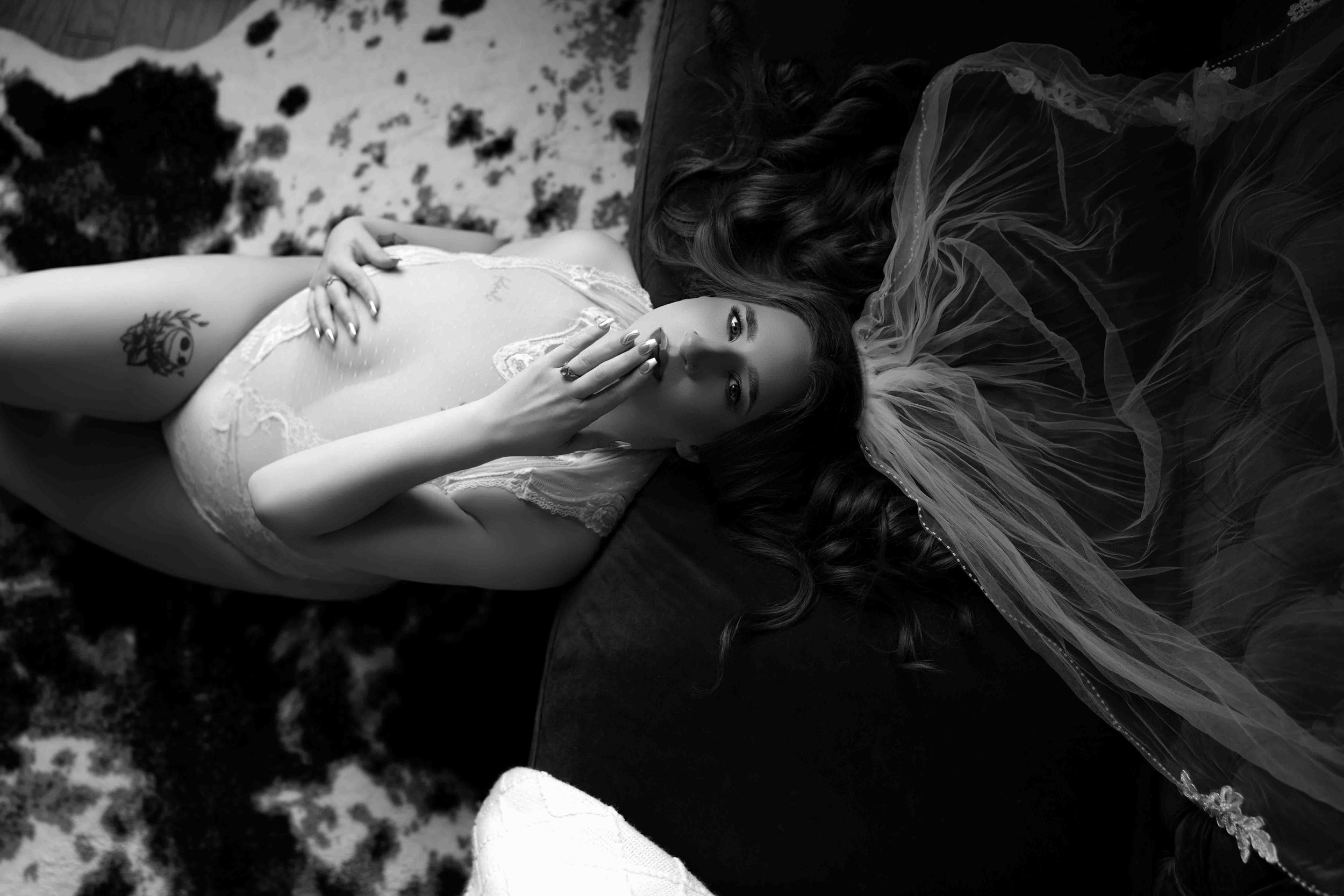
The word boudoir is associated with a private room. In photography, it is commonly used for intimate portraiture made in a personal-feeling setting. That description can include a wide range of visual decisions: window light or studio lighting, a chair or a plain backdrop, a robe or a favorite outfit, a direct gaze or a quiet moment. There is no single prop, pose, or mood that defines every image in the genre.
The label has also been used differently by different people and at different times. Images that later viewers group together may have been made for distinct reasons and described in other terms by their makers. Some were commissioned portraits, some were commercial work, and others borrowed visual ideas from fashion or popular culture. So it is more accurate to discuss overlapping practices than to claim every historical image belongs to one fixed category.
Today, someone may choose a session to mark a milestone, make a personal keepsake, celebrate an upcoming wedding, or simply make time for herself. The photographs do not have to be a gift or be shared with anyone. Their purpose can stay private.
How did portrait traditions shape the genre?
Photography developed during the nineteenth century, when portrait-making was changing alongside new photographic processes and wider access to studios. Early photographic portraits were shaped by the practical limits of equipment and the conventions of portraiture. Subjects often needed to remain still, and a composed studio setting helped create a clear image. Photography was not the casual, immediate activity many people know today.
Portraits have long carried meaning through details that may seem small: clothing, posture, furniture, light, and the choice to commission an image. A photograph could be a keepsake for a household, a record of a person at a particular age, or an image exchanged within a relationship. Those uses should not be collapsed into one modern purpose. A private image made in one period does not automatically mean the same thing as a personal session commissioned today.
There is no universally agreed starting date for boudoir photography. Accounts of its development often connect it to portrait studios, private imagery, and later commercial photography, but those boundaries overlap. A broad reference on the history of photography can help place portraiture within photography’s longer development, though it does not establish a single origin for boudoir work.
For that wider context, see this overview of photography’s history.
When did a recognizable boudoir style emerge?
Rather than appearing at one moment, recognizable boudoir imagery grew through overlapping visual cultures. Studio portraiture, fashion photography, printed picture culture, and changing camera technology all influenced how intimate portraits could be made and viewed. The label itself has shifted. A retrospective account may call an image boudoir even if its maker would have used another description.
One useful historical window is the way photographers described their work to other photographers. A study of United States and United Kingdom how-to guides from the 1980s examines equipment, studio design, and explanations of boudoir practice. That is a focused study of a particular period and source set, not a complete record of all clients or photographers. It does, however, draw attention to something that can be missed when we look only at finished images: the room, tools, directions, and assumptions behind the camera also shape the result.
Commercial photography helped make some visual choices recognizable. Carefully arranged light, considered wardrobe, and deliberate posing could suggest an intimate atmosphere within a planned production. Yet commercial imagery is only one thread. A personal portrait may be less styled, quieter, or more closely tied to a client’s own memories and taste.
It helps to distinguish a style from a purpose. Two pictures can share lighting or wardrobe and still have different audiences, meanings, and conditions of use. One might be commissioned for a publication. Another might be made for one person to keep. Similar appearance does not mean identical context.
How did technology change personal portraiture?
Camera technology and photographic processes affect what photographers can make, how they work, and how images travel. As equipment became more flexible and photography more familiar, portraits could be approached in varied ways. A photographer might plan a controlled studio image, use available light, or combine approaches. Technology influences the possibilities, but it cannot determine a photograph’s meaning on its own. The subject, maker, setting, and intended use matter too.
Printing and sharing methods shape a portrait’s life after it is made. A print kept in a private album has a different audience from an image posted publicly. Digital files can be easier to store and send, but convenience does not mean every client wants to share. Making a photograph and distributing it are separate choices.
That separation is especially important for personal portraiture. Before a session, you can ask how photographs are selected, delivered, stored, or considered for public display. Policies differ from one photographer to another. Ask what permission is needed before a photograph is used in a portfolio or other promotional material. The release process should be explained in plain language so you can decide what you are agreeing to.
Technology also changes how people encounter older images. A print may survive in a family album, a book, an archive, or a museum collection. Each setting gives viewers a different amount of context. A caption, date, or later description can guide interpretation, but it may not tell the full story. When the record does not explain who made a picture or why, it is better to acknowledge that uncertainty than to fill it with assumptions.
How have ideas about the person in the portrait changed?
Images do not exist apart from the culture that makes and views them. Ideas about beauty, privacy, gender, and control over one’s image have shifted over time and continue to shift. A historical portrait can show visual conventions of its era, but it cannot speak for every person who lived then. Nor should the past be reduced to a simple contrast with one uniform present.
Contemporary personal portraiture can bring the client’s preferences closer to the center of the process. The person being photographed can help set the tone, choose clothing, ask questions, and decide what happens to the finished images. That does not mean every session will feel the same, or that a portrait automatically changes how someone feels. It means the experience can be planned around the individual’s stated wishes.
Self-celebration can be one reason to make portraits, but it is not a required mood. You do not need to arrive feeling fearless or already comfortable in front of a camera. You may feel curious, uncertain, excited, or a mixture. A useful conversation beforehand makes room for those feelings without turning them into a performance.
What can a modern session mean to you?
There is no test you need to pass to deserve a portrait session. You might be marking a birthday, a wedding, a new chapter, or a promise to make time for yourself. Perhaps you want photographs that feel polished, relaxed, or somewhere between the two. Your reason can remain personal. You do not owe an audience an explanation.
Personal expression starts with choices that feel meaningful to you. Think about how you want to feel when you look at the photographs later. Do you picture a quiet, reflective mood? A bright and playful atmosphere? A more formal portrait? A blend? These are creative questions, not requirements to fit a particular idea of confidence or femininity.
A simple inspiration folder can help you talk about your preferences. Save examples of lighting, colors, clothing, poses, or settings that appeal to you. Add a note about what you like in each reference. Maybe you like the relaxed posture in one image, the calm expression in another, and the simplicity of a third. You do not need to recreate any one photograph. The examples are a way to explain your taste, not a checklist you have to complete.
You can also name what you do not want. That may be easier than choosing a full visual direction. If a pose, outfit, or style does not feel like you, say so. Clear boundaries are useful creative direction.
How do consent and comfort shape the experience?
Consent is an ongoing conversation, not just a single form or one-time yes. Before you book, ask how the photographer checks in during posing and what you can do if you want to pause or change direction. You should be able to talk about clothing, poses, and the parts of the process that matter to you. A clear answer helps you understand what the experience may involve.
Practical questions matter, too. Ask who will be present, how the appointment is structured, and what happens between styling and photographs. If there are poses or wardrobe choices you do not want, share that in advance and repeat it if needed. Preferences can change in the moment. You are allowed to speak up.
Comfort can mean different things. It may involve having time to ask questions, knowing what happens next, or having a clear way to request a break. It may mean starting with a familiar outfit before trying anything new. It may simply mean knowing that you can say no to a suggestion. These details are worth discussing rather than assuming that every client feels comfortable in the same way.
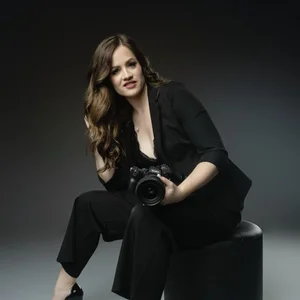
At Tabetha Rae Photography, the stated experience includes professional hair and makeup, guided posing, and an all-female team. Those details describe the studio’s approach, but they do not replace a conversation about your own preferences. The studio serves women in Central Arkansas, with an in-home natural-light studio in Cabot. A consultation gives you a chance to talk about what you hope for, what concerns you, and what you want clarified before making a decision. You can find more about the studio on the Tabetha Rae Photography website.
What does privacy mean for photographs?
Privacy means different things to different people. One client may want to keep every photograph for herself. Another may feel comfortable sharing a selected image with family or a partner, but not with a wider audience. Someone else may choose to allow portfolio use. None of these choices is more valid than another.
Ask how image-release choices work before the session. Find out whether promotional use requires a signed release, whether there are different levels of permission, and how to communicate a decision to keep images private. If you are considering public use, ask what the release covers and whether a delayed release date is possible. Read the policy rather than relying on assumptions.
It is useful to distinguish the privacy of the appointment from the privacy of the finished photographs. A private appointment does not by itself explain how digital files are handled. Ask direct questions about selection, delivery, and any use beyond your own order. The answers should be clear enough to support an informed choice.
You can think through privacy as a few separate decisions:
- Who sees the images? Consider whether you want to view them alone, with someone you trust, or in another arrangement.
- Where can they appear? Ask whether any portfolio or promotional use is optional and what permission it requires.
- How are your choices recorded? Confirm how to indicate your preferences and whether you can ask questions before signing.
- What do you want to keep? Decide which formats make sense for you, and ask how each available option works.
These are not reasons to avoid making photographs. They are practical parts of making a personal decision with your eyes open.
How can you plan a session that feels like yours?
Start with the reason you want photographs, even if the reason is simply that you want them. You can keep that reason brief. Then think about the decisions that will shape the day: mood, wardrobe, styling, pace, and the finished photographs you may want to keep. You do not need every answer at the start. A conversation can help you sort through options.
Choose a feeling, not a checklist
Instead of collecting a long list of poses, describe the atmosphere you want. Words such as calm, classic, playful, bold, or natural can begin the conversation. If you are unsure, explain what you would rather avoid. That gives a photographer useful direction and leaves room to adjust.
Bring wardrobe options you can move in
Choose garments that feel like you and let you sit, stand, and move comfortably. A favorite shirt, robe, or coordinated pieces can be a starting point. You are not required to wear a particular kind of clothing. Ask about wardrobe planning and any studio options, including conditions, before assuming something is included.
Leave space for the session to unfold
Planning can make a session feel manageable, but overplanning can create pressure to recreate someone else’s photographs. Guided posing can give you a starting point while leaving room to adjust posture and expression. You can ask to change a pose, take a pause, or try a different direction. The aim is not to perform a perfect version of yourself.
Make a short, useful plan
A practical plan can fit on one page. Write down the mood you want, a few wardrobe ideas, any firm boundaries, and questions you want answered. Add one or two visual references if they help. This gives you something concrete to discuss without turning the session into a rigid script.
For example, you might note that you want soft natural light, prefer simple styling, feel unsure about posing, and want to keep the photographs private. That is already helpful direction. You do not need a detailed shot list or a perfect explanation of why you want the images.
What should you understand about the investment?
Ask how the process is priced before reserving a date. At this studio, the session or creation fee reserves a planned, styled, guided shoot and a later appointment to review images. Photographs, albums, collections, and other artwork are purchased separately. Paying the session fee does not mean the images are included.
The published investment information lists individual and couples session fees, albums starting at a stated price, collections starting at a stated price, and a required prepayment plan toward a minimum artwork purchase. The site does not make clear whether the session fee counts toward that minimum, so do not assume an all-in total from any one figure. Confirm current terms directly and ask for complete pricing information in writing.
Try to separate the questions into two parts. First, what does the session fee cover? Second, what might you choose to purchase after seeing the photographs? Ask what products are offered, how ordering works, when payment is due, and what each product includes. Product names alone do not tell you the number of images, format, or use rights.
It is reasonable to set a personal spending limit before you attend an ordering appointment. You can ask what options fit that limit and take time to understand the details. If any minimum or prepayment applies, ask how it works before reserving. A careful conversation about cost is part of planning, not an awkward extra.
How do you choose photographs you will value?
An image review is a chance to see the finished photographs and decide what matters to you. You might prefer a small selection of prints, an album, digital images, or another available product. Ask how each option works and what is included before making a choice. Do not assume that a product name explains the number of images or the way you can use them.
Think about how you want to revisit the photographs. An album holds a sequence and can tell a visual story. A framed print gives one image a place in your home. Digital files can be convenient to store and view. These are different ways of living with photographs. No format is right for everyone.
If the images are intended as a gift, make sure that is genuinely part of your own plan. A partner may be one audience, but you can also make a session entirely for yourself. You can decide later whether anyone else sees the photographs.
When comparing products, write down what matters most: a physical keepsake, a set of images you can revisit, a particular format, or a small number of favorites. Then ask which options support that goal and what each costs. This keeps the decision connected to how you want to use the photographs, rather than to pressure to choose the largest option.
What questions are useful before booking?
A consultation is a good place to ask direct questions. You might bring this list and mark the items that matter most to you:
- What does the session fee cover, and which photographs or products are purchased separately?
- What is the current minimum purchase or prepayment requirement, and how does it work?
- Who will be present during the appointment and session?
- How do you guide posing, and how can I request a pause or change?
- What wardrobe planning or closet options are available, and what conditions apply?
- How do image releases work, and can I keep my photographs private?
- What are the estimated timelines for the review appointment and finished products?
- What should I do if I have questions about a policy or need something clarified?
These questions are not a test of the photographer. They help you understand whether the process fits your needs. A thoughtful professional should be able to explain the experience and point out any details that need confirmation.
It can also help to ask what happens next after the consultation. Learn how a date is reserved, what preparation information you will receive, and when you will make decisions about products. Do not assume the same process applies everywhere. Your goal is to understand the sequence well enough to decide whether it feels right for you.
How can you read historical images thoughtfully?
Looking at older photographs can be rewarding when you pay attention to both the image and its context. Ask when and where it was made, who made it, what audience it may have had, and how it was preserved or circulated. A caption or later label can shape interpretation, so avoid treating one description as the whole story.
It is equally important not to assume that every person pictured had the same agency, experience, or relationship to the photograph. The record may not tell us what the subject wanted or how the image was used. When the evidence is limited, say so. That care is part of responsible historical writing.
The same attention to context helps when viewing contemporary portraits. Notice whether the image reflects a person’s choices or simply repeats familiar visual conventions. Consider who controls the final photograph and where it may appear. Your own response matters, too. A visual style can appeal to one person and feel unlike another person’s taste.
One useful way to look at an image is to separate what you can observe from what you infer. You may observe a studio setting, a particular type of light, or a carefully arranged pose. You may infer who the intended audience was, but you need evidence before presenting that inference as fact. This habit helps avoid turning a few surviving photographs into a sweeping claim about everyone who lived in a period.
How does the purpose of a portrait affect its meaning?
Purpose is one of the clearest ways to distinguish images that may look similar. A commissioned personal portrait, a fashion image, and a family photograph can all use considered lighting and pose. Yet they may have different makers, audiences, agreements, and later lives. To understand a photograph, ask not only what it looks like, but also why it was made and what the people involved expected would happen to it.
A portrait created for private keeping may be chosen, printed, and stored with one person in mind. A commercial photograph may be made for a publication or campaign, where a larger audience is part of the plan. A personal session today can also have more than one purpose. Someone may want a keepsake and later decide to share one image with a partner. The choice can remain open until the client understands the options and permissions.
This distinction matters when looking at history because the surviving image rarely tells us everything. A photograph may be separated from its original setting or caption. It may be reproduced many years later for a new audience. Without records, viewers cannot always know who arranged the image, how it circulated, or what the subject thought about it. Restraint is better than assuming that appearance alone explains intention.
What can a portrait reveal, and what can’t it tell us?
A photograph can show visible details: the objects in a room, a sitter’s clothing, the position of the camera, the direction of light, or the format of the print. Those details can help us ask better questions about a particular image. They do not automatically tell us the subject’s private feelings, their degree of choice, or what happened after the photograph was made.
That distinction is useful for anyone exploring the history of boudoir photography. A single image is evidence of a visual choice, not proof that all people of its time shared a particular attitude. A collection may offer a richer view, but it still reflects what was preserved and made available to later viewers. Historical accounts become more reliable when they identify the limits of their evidence.
The same care applies to the present. A polished portrait does not tell an outside viewer everything about the person in it. The subject may have chosen the styling, may have been trying something new, or may simply have liked the light. Viewers should not assume that a photograph defines someone’s identity or explains their whole story.
How can you compare a personal session with historical images?
Comparison works best when you choose a specific question. You might ask how the setting creates a sense of privacy, how clothing contributes to the image, or what changes when a photograph moves from a personal album into public circulation. Each question keeps the comparison grounded in visible evidence and context.
For example, compare two portraits by noting the setting, light, pose, and intended audience if that information is available. Then separate what you can see from what you know from a caption, archive description, or study. If the intended audience is unknown, say that it is unknown. Do not fill a gap with a confident-sounding story.
You can also compare processes rather than images. What choices did the photographer make? What choices could the subject make? Who selected the final image? How was permission handled? The answers may be clear for a contemporary session and missing for a historical photograph. That difference itself is informative, but it should not be treated as proof that every modern experience is automatically more personal or every past experience was the same.
What does a client-led experience look like in practice?
Client-led does not mean that a photographer has no creative role. It means the client’s preferences and boundaries are part of the planning and direction. The photographer can offer guidance, lighting choices, and pose suggestions while listening when a client asks for a change. The images can be collaborative without requiring the client to arrive with technical knowledge.
In practical terms, a client-led conversation might begin with a few simple prompts. What do you hope to remember about this time? Are there styles you like? What would help you feel at ease? Is there anything you want to avoid? You can answer in everyday language. There is no need to know photography terms or arrive with a complete creative brief.
During the session, direction can be offered one step at a time. You might be shown where to stand, asked to turn slightly toward the light, or invited to try a different expression. You can ask why a direction is being suggested, request another option, or decide it is not for you. A pose is a suggestion, not an obligation.
Afterward, the choice continues. You can ask how the image review works and what products are available. The photographs do not need to be judged by someone else’s standard of what a personal portrait should look like. Choose the images and formats that mean something to you, within the options and terms clearly explained by the photographer.
How can you prepare if you feel nervous?
Nervousness does not mean you are unready or that the session is a poor fit. Many people are unfamiliar with being photographed in a guided setting. You can use the consultation to learn how the day is organized, what the photographer will ask of you, and how you can communicate a boundary or request a pause.
Before you speak with the photographer, write down the questions you are most hesitant to ask. They might concern privacy, wardrobe, who will be present, or how much direction you will receive. Asking in advance can reduce uncertainty. You can also ask for an explanation of any policy in plain language rather than feeling you need to interpret unfamiliar terms on your own.
Consider planning for comfort in small, practical ways. Choose clothing you can move in. Bring a familiar item if it helps you feel settled, provided the studio is comfortable with it. Leave time in your schedule so you are not rushing from another commitment. If you need information about accessibility or a particular accommodation, raise it before booking so you can discuss what is possible.
You do not need to promise yourself that you will feel confident throughout the experience. You can simply decide whether you want to explore it and gather the information you need. A session should not require you to perform certainty. It is reasonable to take time before making a decision.
How do physical keepsakes affect the way photographs are remembered?
Photographs live in different ways depending on their format. A printed album can be held and viewed as a sequence. A framed image may become part of a room. A digital file can be easy to access, while also depending on how it is stored and backed up. These formats offer different experiences, so it helps to consider how you want to return to the photographs.
A physical album can make the act of revisiting images feel deliberate. You choose when to open it and whether to share it. A single print can give one photograph a place of its own. Digital images may offer flexibility, but ask what is included, how delivery works, and what permissions apply. Do not assume that every product includes every format or that purchasing an image grants unlimited rights to reproduce it.
When making a selection, try looking for variety rather than a single imagined perfect image. A quiet expression, a detail of styling, and a more direct portrait can each hold a different memory of the session. You can select according to what feels meaningful to you, not what you think someone else would choose.
How can the history inform your own choices?
History can make the present feel less fixed. Visual styles change. Cameras and sharing methods change. Expectations about who gets to choose an image and where it appears change as well. Knowing that there is no one permanent definition of the genre can give you room to think about what you want from a portrait now.
You might prefer a look that draws on a classic studio portrait, or one that feels casual and close to everyday life. You might want a polished album, a few prints, or a collection of digital photographs. You may want to share some images, keep all of them private, or decide after seeing them. The point is not to follow a historical model. It is to make choices that fit your purpose and understand the terms attached to those choices.
Use history as context, not as a standard you need to meet. You are not required to recreate a familiar image, adopt a particular pose, or prove that you feel a certain way. A personal portrait can be valuable because it records a moment that matters to you, even if its style is simple and its audience is only you.
Frequently asked questions
When did boudoir photography begin?
There is no single agreed beginning. The modern label draws on several strands of portraiture, commercial studio practice, and visual culture. Studies of particular periods and practitioner guides add useful detail, but they do not establish one universal origin date.
Does a boudoir session have to look a certain way?
No. The genre includes many settings, lighting choices, clothing, poses, and moods. You can talk with a photographer about the visual approach you prefer and what you would rather avoid.
Do I have to share my photographs?
No. Ask how releases and privacy choices work before a session. Marketing use should depend on the client’s chosen release, and you should understand the current process before agreeing to any use.
Is a session only for a wedding gift?
No. A session may be connected to a wedding, but it can also be a personal keepsake or a way to mark a meaningful time. You decide whether the photographs are for you, someone else, or both.
What does the session fee include?
The session or creation fee reserves the planned shoot and a later image-review appointment. Photographs and artwork are purchased separately, so ask for the current investment details before reserving.
Talk through your questions on a consultation
A history you can make your own
The history of boudoir portraiture reflects changing tools, images, expectations, and choices. You can respect that past without treating it as a rulebook for your own photographs. If you choose a session, let your preferences guide the experience, ask how your images will be handled, and make decisions at a pace that feels right for you.