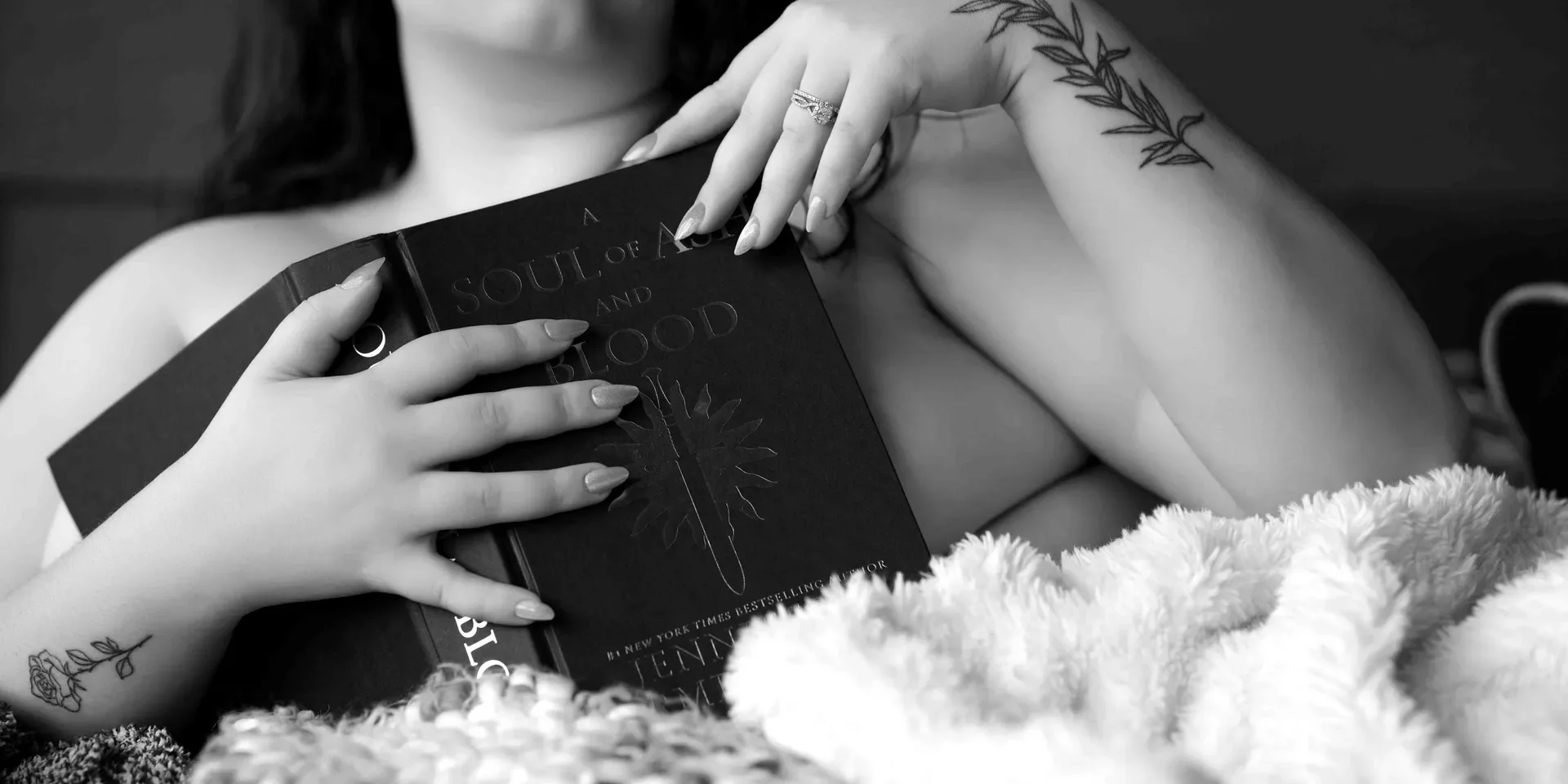
Boudoir photography for women with tattoos can include every design you want to show, while giving you room to keep other details quiet. Your tattoos do not need to be hidden or explained. The first step is simply deciding what you would like the photographs to feel like and sharing those preferences with the photographer.
What can tattoos bring to a boudoir portrait?
A tattoo might mark a memory, a person, a place, or a time in your life. It might also be a design you liked enough to make part of your appearance, without a bigger story attached. Either way, you get to decide how it belongs in your portraits. There is no standard way a tattoo needs to be photographed, and no requirement that every design be visible in every frame.
Some women want a particular piece to be a clear part of the photograph. Others prefer their tattoos to appear naturally, as one detail among expression, posture, and clothing. You might want a close composition of a shoulder design, a wider portrait that includes a sleeve, or a mix of images with different levels of emphasis. These are creative directions to explore, not choices you need to settle before you have spoken with the photographer.
The size, placement, and contrast of a design can affect how it reads in a photograph. A small wrist tattoo might appear when your hand rests near your face. A back design might show with a different neckline or a turn of your shoulders. Several tattoos might be included together in a wider frame, while one design gets a quieter moment in another. A guided session gives you the chance to try variations and see which ones feel most like you.
If you are still deciding, start with a simple question: when you look at these photographs later, what would you like to recognize? The answer might be a tattoo you love, the way you felt on the day, a favorite expression, or a portrait that feels true to your current self. Your answer can guide the session without turning your tattoos into the only subject.
How can you talk about your tattoos during consultation?
A consultation is a place to talk through your vision, the experience, pricing, products, and next steps. You do not need a complete plan or a personal history for each tattoo. It is enough to describe what you hope to see and what you would rather not emphasize. The more plainly you share those preferences, the easier it is to plan wardrobe and framing around them.
You could say, âI would like my shoulder tattoo to show in a few photographs,â or âI want to see versions with and without my back design visible.â If a piece is private, say that you would like it covered or outside the frame. If you are unsure, say so. You can ask to explore a couple of approaches before deciding which images you want to keep.
It can help to sort your thoughts into three simple groups before the call:
Must include: Name a design or placement you would be disappointed not to see in at least some photographs.
Maybe: Identify tattoos you are open to including, but want to decide about after trying a pose or outfit.
Keep private or low-key: Explain if there are designs you would rather cover, crop out, or avoid emphasizing.
This is not a contract or a rigid shot list. It is a starting point for a useful conversation. Your preferences can change once you see how a garment sits or how a pose feels. You can return to the topic during the session and ask for an adjustment.
You may bring a few reference images if pictures help you explain a mood or composition. They do not need to show a person whose tattoos resemble yours. A reference might show a quiet expression, a wider frame, a particular use of window light, or a relaxed way of holding the shoulders. Use references to point out what you like, not as a demand to recreate another person's body or pose.
The studio describes a personalized, guided experience for women in Central Arkansas, with professional hair and makeup and an all-female team. You can learn about the studio and its approach on the Tabetha Rae Photography website. The consultation is also a sensible time to ask about the actual order of the day, how choices are handled, and what you need to decide before reserving a date.
What should you wear if you want tattoos to show?
Wardrobe can frame a tattoo, leave it visible without drawing extra attention, or cover it. There is no required outfit for a tattoo-inclusive session. Begin with pieces you like and can move in, then consider how their necklines, sleeves, straps, and fabric might sit around the designs you want to include.
For an upper-arm or shoulder tattoo, think about where a strap or sleeve lands when your arms are raised, lowered, or relaxed. For a back design, you might ask about a garment with an open back or a layer that can be moved between photographs. A wrist or forearm tattoo may be revealed by a sleeve length or by how you rest your hands. You can bring questions rather than trying to solve every clothing detail alone.
Try to picture the outfit from more than one angle. A top that shows a tattoo while you stand may cover it when you sit or turn. A strap can shift when you move. A loose shirt or robe can create a different feeling and give you an option that is easy to adjust. You do not need a packed suitcase of choices. A few possibilities you genuinely like are easier to discuss than a wardrobe built around guesses.
Fabric and color can affect the mood of a photograph. A simple fabric may leave more visual attention for a detailed tattoo. A textured piece may add its own character. A dark design against a light garment can read differently from the same design beside a darker color. None of these combinations is automatically right or wrong. Ask what options might support the feeling you want, whether that is classic, soft, playful, or more direct.
It can be helpful to start with your taste rather than dressing around your tattoos. Think of clothing you already enjoy, a color you often choose, or a garment that makes you feel at ease. Then consider which pieces might work with the tattoo placement you have in mind. That keeps the wardrobe personal instead of making it feel like a problem you have to solve.
If you are considering makeup to cover a design, bring it up in advance rather than assuming a certain product or method will give the result you want. Wardrobe, pose, and framing may be simpler options. Ask what is practical for the session and choose based on your own preference. No one needs to conceal a tattoo for the photographs to be finished or meaningful.
Wardrobe access and extra outfit options are conditional on collection prepayment, not automatically part of every session fee. Ask about the current arrangements before booking. The session or creation fee reserves the planned, styled, guided shoot and a later ordering appointment. Photographs and artwork are purchased separately. Confirming what is included helps you plan without assuming that a fee covers products or wardrobe access.
How do lighting and framing change the look of a tattoo?
Light can make a tattoo appear more prominent or more integrated into the overall portrait. The direction of the light, your position, the background, and the distance from the camera all affect what stands out. Soft natural light can create a gentle transition across skin and clothing. A small shift in angle may change how much of a design is visible or how its lines meet the frame.
It is useful to think of lighting as one part of a larger set of choices. You can talk about whether you want a clean, bright feeling or a quieter, more shaded mood. You can also ask how a design might appear in color and in black and white. These choices can change the visual relationship between ink, skin, and fabric, but the goal is not to make every tattoo look the same. The goal is to find an approach that suits the portrait you want.
Framing changes emphasis, too. A closer composition can make one design an important detail. A wider portrait may show how it fits with your posture and expression. A tattoo can also sit at the edge of the frame, visible without being the first thing you notice. If you would like a range, ask whether you can try different distances or angles during the session.
With several tattoos, it may help to decide whether you want them shown together or treated individually. A wider composition could include several pieces in the same portrait. A turn of the body or a different garment may bring one design forward and leave others less visible. You do not have to make all of those decisions in advance. Start with one or two priorities, then see what feels right as you work through the session.
Lighting and framing are not a test with a correct answer. If a first version feels too focused on the tattoo, you can ask about a wider view or a different angle. If the design is getting lost and you want it clearer, say that as well. A small change in distance, posture, or clothing may be enough to create a different balance.
How can posing include the designs you care about?
Posing is a series of small choices, not a performance you need to prepare for. Where your hands rest, how you turn, and where you look can affect which tattoos appear. The photographer can guide those choices, so you do not need to arrive with a list of poses memorized.
If you want an arm design visible, the position of your hand and elbow may change how it sits in the frame. A slight turn might bring a shoulder tattoo into view. A side design may be visible in a wider composition, depending on the pose and clothing. These are examples to discuss, not promises about a particular image. The best option is the one that looks and feels natural to you.
Try describing the result you want in everyday language. âI would like this tattoo to be visible, but not fill the whole frameâ gives a clear direction. âCan we make a few portraits where my hands are not covering the design?â is another practical request. You can also ask to compare a still pose with a more relaxed movement. Plain requests are useful because they focus on what you want to see.
If a pose feels strained or a garment keeps shifting, speak up. The photographer can help make an adjustment, and you can ask to pause. Guided posing should make the session easier to follow, not require you to hold a position that does not suit you. A comfortable pose often makes it easier to focus on the overall portrait rather than monitoring every detail.
Your expression contributes to the photograph just as much as tattoo placement. A quiet look, a smile, or a thoughtful expression can all change the mood. You do not have to display confidence in one particular way. If you want to tell the photographer why a design matters to you, you may. You do not owe anyone a story about your choices.
It is also fine if your preferences shift after seeing a few frames. You may find that one design looks best in a close portrait and another works better as part of a wider image. You might discover that the pose you had pictured does not feel like you, while a simple alternative feels right. Treat those discoveries as useful information. They are part of making photographs that reflect your own taste.
How should you decide whether photographs may be shared?
Privacy deserves a direct conversation. A tattoo can be recognizable to people who know you, even if the photograph does not show your face. Before you authorize promotional use of any image, think about what you are comfortable making public and what you want to keep for yourself. There is no need to decide based on what another person might choose.
Tabetha Rae Photography describes several marketing-image release choices and a delayed release option. The studio's stated policy conditions promotional image use on a signed model release. Ask for the current written choices and read the release before you sign. That gives you a chance to understand which photographs could be used, where they might appear, and what a delayed option means.
You might ask whether you can choose specific photographs, whether a tattoo that could identify you can be excluded, and what happens if you do not want any image used for promotion. Ask how a delayed release works and whether it applies to selected images or a broader set. The current written terms are the place to confirm the details. Do not rely on assumptions about what a booking or conversation means.
Think about the image itself as well as the release language. A close portrait that leaves out your face may still show a distinctive tattoo. A wider image might show more of your appearance and surroundings. Neither is automatically more private for everyone. Consider what someone familiar with you could recognize, then decide what you are willing to authorize.
You can separate the decision to make photographs from the decision to share them. Choosing no promotional use does not make a private portrait less valuable. You can make images for yourself, select the ones you want, and keep the release choice separate from that experience. If you are not ready to decide at the first conversation, ask when you need to make the choice and request time to read the document.
It is also useful to ask how finished photographs are presented and purchased. The studio describes a return ordering appointment where edited color and black-and-white photographs are shown for selection and album customization. The session fee does not include the photographs. Clarifying the purchase process and release choices separately makes it easier to understand each decision in front of you.
What does the studio process look like?
A clear timeline can make planning easier. The studio recommends booking six to eight weeks before finished artwork is needed and describes scheduling up to twelve months ahead, subject to availability. If you have a wedding, birthday, anniversary, or another date in mind, mention it during consultation. Ask what timing is realistic for your selected products rather than relying on an assumption that every item will be ready by a particular day.
The process begins with a conversation about your ideas, the experience, pricing, products, and financing. If you reserve a date, the studio's planner describes signing a contract and paying a date-reservation fee. Ask for the current terms before committing. You can also ask when wardrobe planning happens and what information you will receive after the date is reserved.
The session includes professional hair and makeup, wardrobe discussion, and guided posing. The published planner describes about three hours in the studio, including around 60 minutes of photography. Treat these as planning descriptions rather than a guarantee of exact appointment timing. The studio also describes photographing one session per day. If the pace or schedule matters to you, ask how the day will be arranged.
After the shoot, you return for an ordering appointment, described as taking place roughly within a week. You view edited images and decide which photographs and artwork you would like to purchase. You do not need to know in advance which image will become your favorite. A reveal can help you decide whether you want to select a close view of a tattoo, a more open portrait, or a combination.
Published product starting points include albums from $1,800 and collections from $2,500, with a required prepayment plan toward at least $1,800. The published information does not say whether the session fee counts toward that minimum, so do not treat those figures as one all-in amount. Ask for the current investment guide and a clear explanation of what each amount covers before making a financial plan.
Delivery estimates are worth discussing if you need artwork by a certain date. The studio describes purchased digital photographs as often delivered the same day or within 48 hours after full payment, subject to studio absence. Physical artwork commonly takes 15 to 20 days, while some custom products can take up to five weeks. These are estimates, not guaranteed dates. Leave room for the actual selection and production process.
How do you make a simple plan without overthinking it?
A short plan can make the consultation more useful without scripting the whole experience. Write down the feeling you want from the photographs, the tattoo you most want included, and one question about privacy or wardrobe. Three clear notes are enough to begin. You can add details as you learn more about the studio's process.
For example: âI want the portraits to feel calm and natural. I would like my upper-arm design visible in some images. I have not decided about promotional use.â That gives the photographer a visual direction and signals that image sharing needs a separate conversation. It does not require you to decide every outfit, pose, or finished product before you have seen the photographs.
You can make a short wardrobe list from items you already own and like. Next to each item, write a question such as, âWould this neckline show my shoulder tattoo when I turn?â or âCould this shirt give me a more relaxed look?â Questions leave room for practical guidance. You do not need to shop for an entirely new wardrobe because you have tattoos.
It may also help to separate decisions by when they need to happen. You can tell the photographer which tattoos matter during consultation. You can discuss clothes during planning. You can read the release before authorizing promotional use. You can decide which photographs to purchase after the reveal. Knowing which choices can wait can reduce pressure during the first conversation.
If you are preparing for a milestone, think about what you want the photographs to mean to you. For a wedding, the images could be a possible gift for your partner, a keepsake for yourself, or both. A celebration does not need to be tied to a partner or a particular event. Your reason for making portraits can be personal and simple.
You can also tell the studio what would make the day easier to navigate. Perhaps you want a little time to settle in, you have questions about how the session flows, or you prefer to discuss privacy before choosing clothing. There is no need to phrase these requests perfectly. Clear information helps the team understand what you need to talk through.
What choices can you compare for tattoo visibility?
It may help to name a few possible approaches rather than thinking only in terms of showing or hiding every tattoo. The options below are creative directions to discuss. They are not guaranteed results, and you can use different approaches in different photographs.
| Approach | What it can emphasize | Question to ask |
|---|---|---|
| Clearly featured | One design becomes a noticeable part of the portrait. | Could we try a closer frame or angle for this tattoo? |
| Part of the full portrait | The design appears alongside your expression, posture, and wardrobe. | How might a wider composition include it naturally? |
| Quietly visible | The tattoo can be present without becoming the central detail. | Could a different garment or angle make it less prominent? |
| Outside selected frames | Wardrobe, pose, or framing keeps a particular piece out of view. | What options could cover or crop this design in some images? |
Looking at a few approaches can make the conversation more concrete. You are not choosing between all tattoos visible and all tattoos covered. You can ask for one design to be clear in a few photographs, let others appear naturally, and leave a particular tattoo out of selected frames. If an approach does not feel like you, say so and try another.
It is useful to consider the whole image when you compare options. Ask yourself where your eye goes first, whether your expression feels natural, and whether the design appears as you intended. A portrait can include a tattoo without making it the only point of interest. You might prefer a photograph where the ink is easy to see, and another where it is simply part of your overall look.
What questions should you ask before reserving a date?
You do not need to ask every possible question. Choose the ones that matter to your comfort, privacy, schedule, and budget. If an answer is unclear, ask for a more specific explanation before you make a commitment.
Can we discuss which tattoos I hope to show before the session?
Can I try different framing or poses for one design?
How might wardrobe affect the tattoos I want included?
What should I do if I change my mind about an outfit or pose during the session?
What are the current image-release choices, and when do I need to decide?
What does the session or creation fee cover, and what is purchased separately?
What are the current prepayment terms and product starting prices?
How far ahead should I book if I need finished artwork for a specific date?
How will the day be scheduled, and what should I bring?
A useful answer should give you enough information to understand the choice in front of you. If you still feel uncertain, you can ask the question another way or request the relevant written details. You are allowed to understand the process before reserving a date.
How can you prepare for the session day?
Preparation should support the experience, not become a test you have to pass. You do not need to change your appearance, learn poses, or make your tattoos fit a trend. The most helpful preparation is practical: confirm the schedule, collect your questions, and know which pieces of clothing you want to discuss.
If a tattoo is still healing, ask the tattoo artist who gave you aftercare instructions or an appropriate health professional about timing before scheduling an activity that could affect it. Do not set aside care guidance for the sake of a session. A healed design and a new one have different needs, and the person who provided your care instructions is the right source for questions about healing.
If a tattoo has changed over time, you do not have to explain its history unless you want to. Decide whether the current design should be featured, included naturally, or left out of certain frames. The photographs can reflect your preferences now without documenting every chapter of the tattoo's past.
Before you arrive, confirm your appointment details and directions with the studio. The studio is an in-home natural-light space in Cabot, and appointments are planned rather than walk-in visits. Follow the directions you receive for your appointment instead of relying on an address found elsewhere. That keeps the visit organized and respects the privacy of a home-based studio.
On the day, you can ask for a pause or a change if something feels different from what you expected. You can request an adjustment to clothing, posture, or the pace of a set. A plan is helpful, but it does not take away your ability to make choices as you go.
How do you know if the plan feels right?
A workable plan does not have to remove every question. It should leave you understanding the experience, knowing how to raise a preference, and feeling able to make decisions about your images and privacy. If you can explain what matters to you and know when to ask for help, you have a solid place to begin.
Notice how your questions are handled during consultation. Can you talk about tattoos without being pushed to hide them or make them the entire story? Are the session and artwork purchases explained separately? Can you review the image-release choices before signing? Those practical details help you decide whether the process fits your needs.
You can use the studio's blog for more boudoir planning guidance as you think through your ideas, then bring any remaining questions to the consultation. Take time with decisions that are not urgent. Ask what must be settled to reserve a date and what can be discussed later. You do not have to choose your full wardrobe or promotional release approach in the first conversation.
Frequently asked questions
Can I include some tattoos and leave others out?
Yes. You can ask for certain designs to be visible while keeping others covered, cropped out, or less prominent. Explain your preferences during consultation and revisit them when you discuss clothing and poses. There is no rule that every tattoo must appear in every photograph.
Do I need to tell the photographer what my tattoos mean?
No. You can share a story if you want, but it is not required. The photographer needs to understand your visual preferences, not private details you would rather keep to yourself.
What if I feel nervous about posing?
Tell the photographer during consultation. The studio describes guided posing and a personalized session, so you do not need to arrive knowing what to do. Ask how the session works and speak up if you want a pause or a change in direction.
Does the session fee include the photographs?
No. The session or creation fee reserves the planned, styled, guided shoot and a later ordering appointment. Selected photographs, albums, collections, and other artwork are purchased separately. Ask for current investment details so you understand the fee and product options before booking.
Talk through your session ideas
Make the portraits feel like yours
Your tattoos do not need to be a problem to solve before a boudoir session. They can be clearly featured, quietly included, or left out of selected photographs according to your wishes. Start with an honest conversation, ask about styling and image sharing, and give yourself room to choose what feels right when you see the finished work.