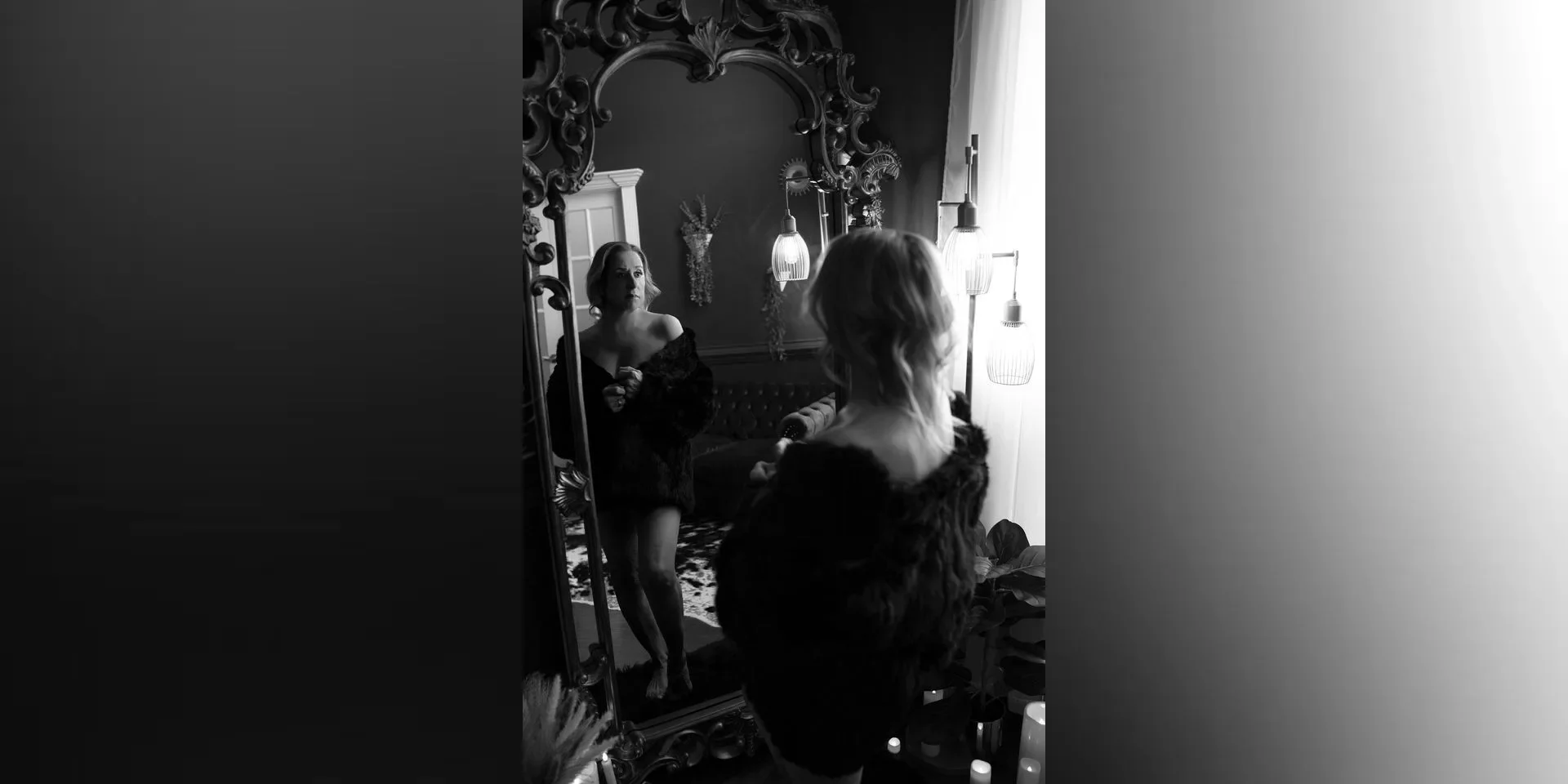
Woman in a faux fur coat looking into an ornate studio mirror during a personal portrait session
Boudoir photography personal branding starts with a simple split. Some pictures can show the woman behind the work. The rest should stay private. A headshot updates a profile. A commercial shoot sells a product or a service. A boudoir session is built around you: how you want to feel, what you want to remember, and which images, if any, you later choose to share.
At Tabetha Rae Photography in Cabot, that day is planned, styled, and guided. Professional hair and makeup, wardrobe help, and posing direction are part of the experience. There is no branding package. Paying the session fee does not include the images. You see the photographs at a later reveal, then you decide what to keep and what, if anything, may be public.
Schedule a call to talk through your vision, the experience, and what a personal set of portraits could look like.
What boudoir photography personal branding actually means
Personal branding is the way people recognize you before they sit down with you. For a lot of women, that picture is a crop from a group photo or a stiff portrait that no longer looks like her. Boudoir photography personal branding uses a private, guided session to make portraits that still look like you, only more intentional.
The point is not to turn your business into a lingerie campaign. The point is to have images that match the woman clients already meet. That might be a close portrait with finished hair and makeup. It might be a quiet black-and-white frame that feels like your voice. It might be a set you keep for yourself, plus one or two images you later allow on a website or a talk.
A useful test is the job of the picture. If the job is "show what I am like to work with," you are in personal-brand territory. If the job is "help me see myself clearly," you are in boudoir territory. Plenty of women want both. They do not have to use every frame in public.
This is also why a one-size brand kit rarely fits. Your site, your LinkedIn, your speaker page, and your private album can each need a different level of polish and a different amount of privacy. The session can create that range. You decide later, at the reveal, which images stay with you and which ones are allowed to travel.
How a personal portrait differs from a headshot
A standard headshot has a narrow job. It needs to read clearly at a small size on a profile, a badge, or a website team page. The frame is usually tight, the clothing is straightforward, and the expression is meant to look capable in one glance.
A boudoir portrait has a wider job. It can be a face, a gesture, a full scene, or a detail you care about. The clothing can be lingerie, a sweater, a button-down, a bodysuit, or sheets. The mood can be soft, playful, or quiet. You do not need modeling experience. At this studio, posing is guided so you are not left guessing what to do with your hands.
The two ideas can inform the same visit, but they are not the same product. This studio does not publish a headshot package, a set number of profile files, or a branding add-on. If you want a clear face for a profile, say that while you plan wardrobe. A tighter crop from a portrait you already love can do that job. It is still chosen at the reveal, and it is still purchased separately from the session fee.
That split keeps the day honest. The boudoir images are the body of work you review in person. You buy the images and artwork you want after you see them. Nothing in the planning turns the session into an unlimited gallery for your business.
How this differs from a commercial production
Commercial photography is hired to sell or explain something else. A product, a service, a location, or a campaign is the subject. The wardrobe, the set, and the poses are chosen to serve that brief. The images are judged by how well they do the job for the brand that paid for them.
A boudoir session flips that. You are the subject, not a stand-in for a product. The planning starts with what you want to feel and remember. Hair and makeup are there to help you look like yourself on a good day, not to match a campaign board. If you have prepaid for a collection, you may also use the client closet. Closet access is not included with every session fee.
Fashion photography sits closer to commercial work than people expect. A fashion frame is often built to show a garment, a collection, or a story for an audience. If you want that comparison in more depth, the studio's guide to boudoir photography versus fashion photography walks through wardrobe, posing, and who the pictures are for.
You can still use a personal portrait in your business. The difference is consent and purpose. A commercial file is made to be published for the client who commissioned it. A boudoir file is made for you. It becomes public only if you choose a release that allows it.
Where these portraits can help, and where they should not
Think in lanes. Some images are public. Some are semi-public. Some should never leave your house. Mixing those lanes is how a personal session turns into a regret.
| Use | What usually works | What to skip |
|---|---|---|
| Website or about page | A clear portrait with your face, finished hair, and clothing you would wear to a client meeting. | Anything you would not want a new client to see on the first click. |
| LinkedIn or a speaker bio | A tight crop that still reads at thumbnail size, chosen from a portrait you are willing to share. | A wide scene that loses your face when the image is small. |
| Instagram or a personal newsletter | A portrait that sounds like your voice, and only after you choose a release that allows sharing. | Posting before you pick a release, or posting a frame you only liked in private. |
| Just for you | An album, a folio, or digitals you keep off public profiles. | Treating every beautiful frame as marketing. |
The takeaway: a private album is still a real choice. It is a record of how you wanted to see yourself in this season. Many women book because of a milestone, a wedding, motherhood, or a wish to do something for themselves. The public profile can wait. The session does not have to.
If you only need a logo, product photos, or a full commercial set for a launch, say that on the consultation. This studio's work is a boudoir experience. It is not a commercial production house, and it should not be booked as one.
What the studio actually includes
The session fee reserves the experience. It does not buy the photographs. For an individual session the fee is $500. A couples session is $600. That fee covers the planned visit: pre-session planning materials, wardrobe guidance, professional hair and makeup, guided posing, and a later Reveal and Ordering Appointment.
Images, albums, and collections are a second purchase. Albums begin at $1,800. Collections begin at $2,500. The studio also asks for a prepayment plan toward at least $1,800. The public pages do not say whether the session fee counts toward that minimum, so there is no single all-in price to quote here. You will see edited images in color and in black and white at the reveal, then choose what to take home.
On session day, the experience page describes a 10 a.m. start with hair and makeup. While that happens, you go through outfits and pick the three looks that will photograph best. Then the camera work is guided, one pose at a time. The studio photographs one session a day, so the visit is not stacked against someone else's appointment.
Plan the date around the artwork, not just the camera. Published guidance is to book about 6 to 8 weeks before you need finished products. Sessions can be scheduled up to 12 months out, when the calendar allows. Digitals bought at the reveal are often ready the same day or within 48 hours after full payment. Physical pieces commonly take 15 to 20 days, and some custom products take up to five weeks. Those are estimates, not promises.
You can read the fee, the planning steps, and the artwork path on the investment guide. Bring your questions to the call. Pricing details that are not on the public pages belong in that conversation, not in a guess.
How to plan the session for a personal brand
Start with the public job, if you have one. Name the page or profile that needs a picture, and name who will see it. A LinkedIn crop and a private album are both valid. They are not the same request. Saying both out loud keeps the wardrobe and the posing honest.
- Write down where a photo might appear, and where it must not appear.
- Bring clothing you already wear for work, plus anything that feels like you at home. Lingerie is optional.
- Tell the studio which looks are for a possible public portrait and which are only for you.
- Choose your release at the reveal, before any image is posted.
- Use that same appointment to separate private artwork from anything you might share.
Hair and makeup are included, so arrive with a clean face and dry hair. You do not need a full glam plan of your own. If you want the client closet, ask whether your prepayment includes it. Do not assume the closet or extra outfits come with the session fee. The FAQ says full sessions include three outfit changes, and that closet access is a bonus when you prepay for a collection. Confirm what applies to your date on the call, since the planner and the FAQ do not use the same closet wording.
Posing help is part of the promise. If you want a preview of how direction works, the studio's notes on how posing is guided are a useful read before you arrive. You still will not be expected to direct yourself.
Couples sessions are available at the $600 fee. This article is about one woman's personal brand, not a couples plan. If a partner portrait is the actual goal, say that on the call so the session is booked as what it is.
Privacy comes before any public use
You pick the release after you see the photos, not before. The studio offers four choices: no release, an anonymous release, an anonymous-plus release limited to full-face images you select, and a full release. No release means the images stay private. Anonymous means your full face is not shown. Anonymous plus lets you mark the full-face frames you are willing to share. A full release allows portfolio and marketing use. If you allow sharing, you can also choose a release date so nothing posts before a wedding, anniversary, or other date that matters to you.
The studio's own rule is that full nudity is never shared publicly. Written consent through a signed model release is required before images are used in advertising or social posts. Choose the release for the image, not for the whole session. A portrait you love in an album may be the wrong frame for a homepage.
The FAQ is the place to read those four options in the studio's own words before you decide. A portrait you might use on your site is still your file. It is not automatically added to the studio's marketing.
What to ask on the consultation
The consultation is a no-pressure call about your vision, the experience, pricing, and the next step. It is the right time to separate a personal portrait plan from a commercial job.
- Which of my outfits will work for a profile, and which are only for private images?
- Does my prepayment include closet access, or should I bring everything?
- How do the four release choices work if I want one image on my website and the rest kept private?
- When would digitals and albums typically be ready if I have a launch or an event date?
- Is this session the right fit, or do I actually need a commercial photographer?
You do not need a mood board to book the call. You need a clear sentence about what the pictures are for. "I want a private session, plus one face I might use on my about page" is enough to start.
Schedule a call when you are ready to talk through a session that stays yours, including any portraits you later choose to share.
Frequently asked questions
Can boudoir photos work for a personal brand?
Yes, if you choose frames that match the place they will appear. A clear portrait can sit on a website or LinkedIn. More intimate images can stay in an album or on your phone. You do not have to publish the whole session, and this studio does not sell a separate branding package.
Does the session fee include profile photos?
No. The session fee reserves the experience. It does not include the images. There is no published headshot add-on or set of profile files. If you want one portrait for a public page, you choose it at the reveal and purchase it with the rest of your artwork.
Is this the same as hiring a commercial photographer?
No. A commercial production is built to sell a product, service, or campaign. This session is built around you, with hair, makeup, wardrobe guidance, and directed posing. It can give you portraits you later use in your business. It is not a branding package or a product shoot.
Do I have to share the photos?
No. You can keep every image private by choosing no release. If you want the studio to share something, you pick a release after the reveal, and you can set a later posting date. The studio never shares full nudity publicly.
What should I wear if I might use one photo publicly?
Bring at least one outfit you would wear when you meet a client, plus anything you want for the private part of the session. Lingerie is welcome and optional. A sweater, a button-down, a bodysuit, or a simple tee can all photograph well. Hair and makeup are done at the studio.