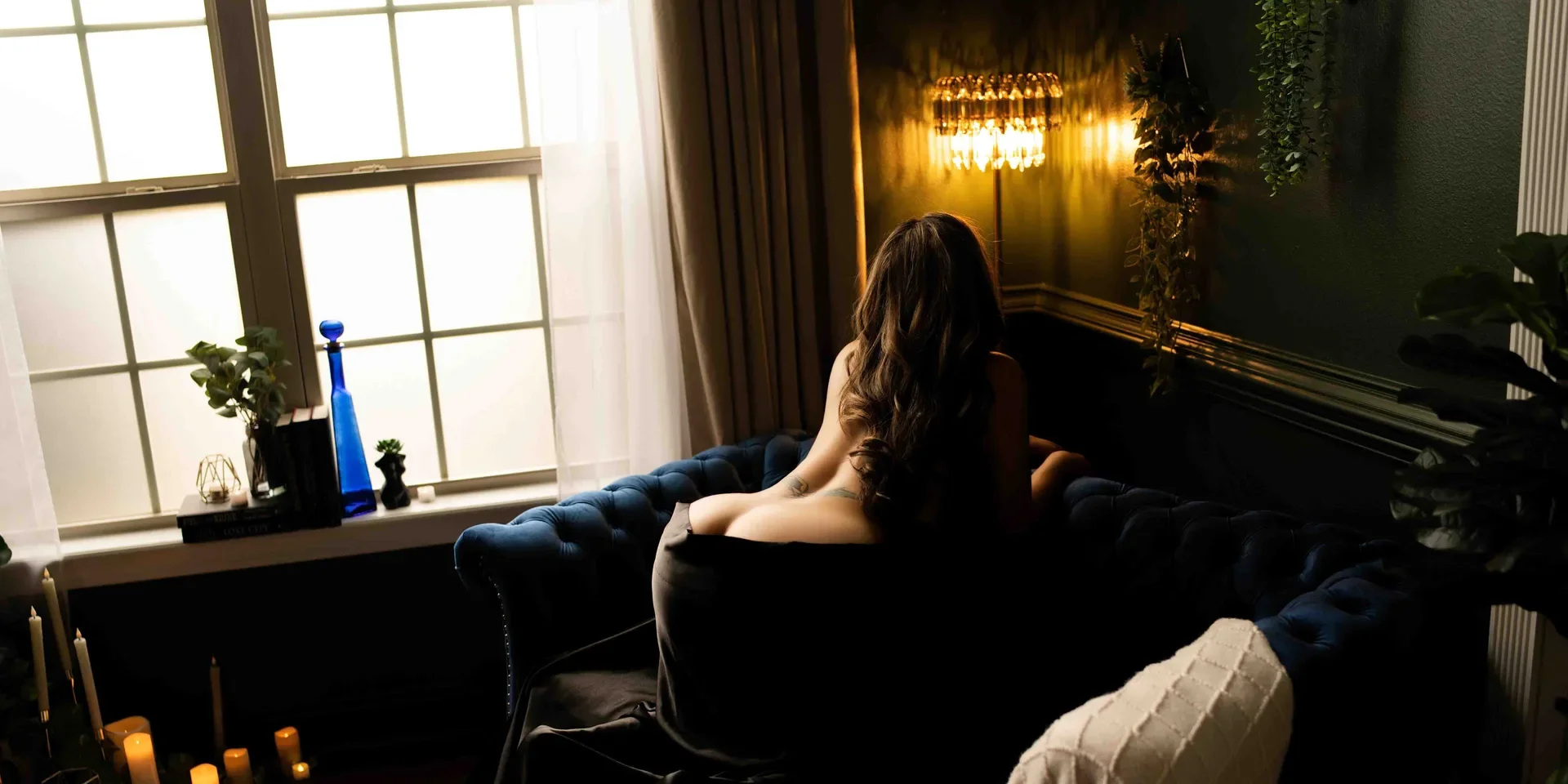
Woman in a soft robe sitting comfortably on a bed in gentle natural light
Considering boudoir photography for postpartum women can bring up curiosity, excitement, and questions. You may be thinking about a milestone, wanting to do something for yourself, or simply wondering what a session could look like during this chapter. There is no single right time or way to approach it. Your comfort, priorities, and personal circumstances matter more than following someone elseâs timeline.
What does postpartum timing mean for a session?
Postpartum life looks different for every person. Your energy, schedule, routines, and feelings about being photographed may change from week to week. A photography session is not something you need to fit into a prescribed window. You can consider it whenever it feels worth exploring, and you can decide that now is not the right moment.
This is a personal planning decision, not a medical one. A photographer cannot advise you on recovery or tell you when your body is ready for an activity. If you have health or recovery questions, bring them to a qualified healthcare professional who knows your circumstances. For the photography side, a consultation can help you talk through the experience, the schedule, and what options may fit your preferences.
It may help to ask yourself:
- Do I have enough time and support around the day to make this feel manageable?
- Would I rather plan well ahead, or wait until my schedule feels more settled?
- Am I interested in doing this for myself, for a milestone, or for another reason?
- Would I feel more at ease with a plan that allows pauses or a particular kind of pacing?
- What would make the experience feel like a choice I am making for myself?
You do not need complete answers before you inquire. The point is to identify what matters to you, not to pass a readiness test. One person may want to start with a conversation months ahead. Another may prefer to revisit the idea after daily routines feel more familiar. Neither choice needs to be explained or defended.
It can also help to separate interest from a commitment. You might be curious about the process but not ready to choose a date. You can ask for information, consider how it fits into your life, and let the decision sit for a while. If the idea feels right later, you can take another step then. If it does not, you have not missed a required window.
How can you choose a date without pressure?
Start with your calendar and the finished artwork date, if you have one in mind. Tabetha Rae Photography recommends scheduling your session six to eight weeks before finished artwork is needed. That is a planning recommendation, not a guaranteed delivery date. The studio also describes scheduling up to 12 months in advance, subject to availability. If you are considering a session around a birthday, anniversary, or wedding, mention the date when you ask so you can discuss whether the timing is workable.
Work backward from the date only as a planning exercise. For example, if you hope to have a finished album for an occasion, ask how far ahead to reserve the session, when the image-selection appointment usually happens, and how long the particular artwork may take. The studio describes a return ordering appointment generally within about a week. Physical artwork commonly takes 15 to 20 days, and some custom products may take up to five weeks. These are estimates rather than delivery promises. Build in a cushion and confirm current expectations for the item you choose.
Here is one way to make that conversation concrete. Imagine you would like an album ready for a family celebration in early autumn. First, tell the studio the date you have in mind. Ask which session dates are available far enough in advance, when you would likely return to select photographs, and what current production estimate applies to the album you are considering. Then decide whether the remaining time feels comfortable, with room for ordinary changes. This approach gives you details to use without treating a target date as guaranteed.
Leave room for everyday uncertainty. Childcare plans may change. A family schedule can be hard to predict. You may want more time to think about wardrobe or what you hope to get from the photographs. Ask about current booking terms instead of assuming a date can be moved in a particular way. It can also help to separate the decision into two parts: first decide whether you want to explore a session, then consider a date if the experience and timing sound right.
A date does not have to be tied to a major event. You may choose a quieter time that works for your household, or decide that a milestone gives the experience personal meaning. The important detail is whether the plan feels practical to you. A consultation can help you understand availability without turning an initial question into a commitment.
When comparing possible dates, think about what the day before and the day after look like, too. Would a weekday appointment fit better with the help available to you? Would you rather leave the following morning open, or would that not matter to your routine? There is no best answer for everyone. Looking at the surrounding calendar can make it easier to choose a date that feels considered instead of squeezed between obligations.
What might help you feel comfortable?
Comfort can mean different things. It may mean having the plan explained before you arrive, knowing who will be present, having time to settle in, or being able to discuss what you do and do not want photographed. You can bring those requests to the consultation. Ask how posing guidance works, how the session is paced, and what choices you have during the experience.
Tabetha Rae Photography describes a guided session with professional hair and makeup, a wardrobe discussion, and one session per day. A visit is described as taking about three hours, with roughly 60 to 90 minutes of photography in the planner. These details can give you a starting point for planning, but ask what the current schedule involves and whether there is room to discuss your individual needs. One session per day is part of the studioâs described approach, but it does not remove the need to talk through the timing that will work for you.
You might want to talk through practical details such as:
- How much time should I plan for the full visit, including hair and makeup?
- Can I take a pause if I need one?
- How will you guide me if I have never been photographed this way?
- Can I share boundaries or preferences before the session?
- What happens if I feel uncertain about a pose or styling choice?
- May I ask for a moment to consider a suggestion before trying it?
- Can we talk in advance about the parts of the experience that are new to me?
You are allowed to ask these questions before booking. Clear expectations help you decide whether the photographerâs approach feels like a good fit. You can also ask what parts of the experience are planned in advance and what can be discussed on the day. A thoughtful conversation should make room for your preferences rather than expecting you to arrive with a performance ready.
If it helps, make a short comfort plan before the call. Write down the things that would make the day easier, such as knowing the rough schedule, having time to discuss wardrobe, or understanding how to request a pause. Keep the list focused on your priorities. You do not need to plan every detail or anticipate every feeling in advance.
You can also ask how direction is offered. Some people like clear step-by-step guidance because it means they do not need to know what to do with their hands or where to look. Others want to talk through a pose before trying it. You may prefer to see an example or hear a description first. Tell the photographer which kind of explanation is useful to you. A guided session can still leave room for you to speak up and make choices.
What wardrobe choices can stay flexible?
You do not have to choose a single look that represents your whole experience. Wardrobe can be simple, personal, and adaptable. Some people bring a favorite robe, a comfortable top, a meaningful piece of clothing, or a more styled outfit. Others prefer to discuss options first and decide later. The right choice is the one you feel comfortable considering.
Ask how wardrobe planning works and what you should bring. The studio describes wardrobe discussion as part of preparation, and a client closet may be available under specific collection prepayment conditions. Closet access is not included with every session fee, so confirm the current terms before making plans around it. Avoid relying on an assumed outfit count or closet inventory, since published planning details may differ.
Keep the practical side in view. You might prefer clothes that are easy to change in and out of, or items that feel familiar. If you have a meaningful garment connected to this chapter, ask whether it could be incorporated. There is no requirement to shop, wear a particular style, or make your session look like anyone elseâs. A wardrobe conversation can be about what you already own and what feels like you, not building a whole new collection.
If choosing outfits feels like too much to settle immediately, make a short list of possibilities rather than deciding on every detail. You could note colors you enjoy, textures you like, or an item with personal meaning. Then ask how much preparation the studio recommends and whether decisions can wait until closer to the session. The goal is to make planning manageable, not to create another deadline.
For example, your first list might include a soft robe, a familiar top, and one item that feels special. That is a starting point for discussion, not a promise that you will wear every option. Ask what the studio suggests bringing and whether any styling choices need to be made before the appointment. Keeping the list small can make it easier to talk through possibilities without turning wardrobe into a shopping project.
You can think about wardrobe in terms of how you want the photographs to feel, rather than trying to follow a standard formula. Would you like the images to feel relaxed and personal? Are there colors or fabrics you naturally reach for? Is there a garment with meaning to you, even if it is not a traditional session outfit? Your answers can help guide a planning conversation, and you can still change your mind as the session gets closer.
How can you plan around childcare and energy?
Logistics are part of feeling at ease. If possible, think about childcare, transportation, meals, and the time you will need before and after the appointment. You may want another trusted adult to help with responsibilities that day. The right arrangement depends on your household and what makes the session feel realistic for you.
Ask how long to reserve for the appointment and whether the studio can explain the schedule in advance. The published visit estimate is about three hours, including the styled and guided experience. The time spent photographing is described separately in the planner. Make sure you understand the current plan before arranging childcare or other commitments.
It may be useful to keep the day uncomplicated. Avoid stacking the appointment between several time-sensitive errands if that would make you feel rushed. If you would like a little breathing room afterward, include that in your plan. These are options to consider, not rules you have to follow. If your schedule depends on someone elseâs availability, ask about dates before making arrangements that are difficult to change.
You can also make a simple planning note with the questions that affect your day most: how long the visit is expected to take, what time you need to arrive, whether you should bring anything, and when you will return to view images. This keeps the practical details in one place. If a household plan changes, contact the studio to talk through the next step rather than assuming a particular policy.
Consider the full chain of arrangements. If someone is caring for your child, confirm the start and end time you need them for, and leave a little margin for travel if that helps. If you are coordinating with another adult, agree on who handles the tasks that usually fall to you during that part of the day. You might also decide what would be helpful at home when you return. These small arrangements are not requirements. They are examples of ways to make a special appointment fit into a real family schedule.
There is no need to present a perfect plan during a consultation. You can explain that your schedule is still changing and ask what information would be useful before reserving anything. If your needs change later, reach out to discuss the situation and ask what options are available under the current booking terms. Do not assume a particular change or cancellation policy without checking it directly.
What should you know about privacy and image sharing?
Privacy questions deserve clear answers before a session. Ask how images are handled, who may see them as part of the studioâs workflow, and what choices you have about any public use. Do not assume that agreeing to a session means agreeing to share photographs for marketing.
Tabetha Rae Photography describes several image-release choices, including a delayed release option. Promotional use depends on a signed model release, so ask to review the current choices and understand what each one permits. If you do not want images shared publicly, say so and confirm how that preference is documented. You can also ask whether a choice can be revisited and what the studioâs current policy allows.
It helps to distinguish between making photographs and authorizing public use. Ask what the release options cover, whether a choice applies to particular images or a wider set, and how to record your decision. Read the current paperwork rather than relying on assumptions or a verbal shorthand. If you are unsure, take the time to understand the terms before signing.
Think about privacy for the finished artwork, too. If you plan to display an album or print at home, consider who might see it and where you would like to keep it. You decide what feels appropriate for your life. If you are choosing a gift, you can also think ahead about how and when you would want to share it with the recipient.
Before a consultation, you might sort privacy questions into two groups. The first is about the studioâs process: who handles the photographs, how image choices are recorded, and what the release options mean. The second is about your own preferences: whether you are open to any public sharing, whether you would rather decide after viewing the photographs, or whether you prefer to keep them private. You do not need to know your final answer to ask how the choices work.
It is also reasonable to ask how to communicate a preference clearly. You may want to know whether the choice is made in writing, whether separate choices apply to different uses, and where you can read the current terms. A direct conversation can help you make an informed decision. The release is a separate choice from deciding whether to create photographs in the first place.
What happens after the session?
It helps to understand the full process, not only the photography appointment. The studio describes a later ordering appointment, generally within about a week, where edited color and black-and-white photographs are presented for selection and album customization. The session or creation fee reserves the planned shoot and ordering appointment. Photographs and artwork are purchased separately, so paying the fee does not include the images.
Before you book, ask how the ordering appointment works, what products are available, and when payment is due. Published information describes albums starting at $1,800, collections starting at $2,500, and a required prepayment plan toward at least $1,800. Those figures do not establish an all-in price, and the information does not clarify whether the session fee counts toward the minimum. Ask for the current investment details in writing and make sure you understand what is and is not included.
A useful way to approach the investment conversation is to ask about the two parts separately. First, clarify what the session/creation fee reserves and includes. Then ask what artwork or image purchases cost, how the prepayment plan works, and what happens if you decide on a different product. Ask whether any amount is due at the ordering appointment and what payment methods or schedule are currently available. Do not assume the fee and artwork purchase are one combined amount.
It may help to decide on a comfortable spending range before the ordering appointment, if you have one. You do not need to make that decision during an initial inquiry. Ask for current product information in advance, and take time to compare the options you are shown. A clear plan can help you focus on what you value, whether that is a hand-bound album, another physical keepsake, or a different choice the studio currently offers.
Delivery timing is worth discussing if you have a date in mind. Published estimates say purchased digitals are often delivered the same day or within 48 hours after full payment, while physical artwork commonly takes 15 to 20 days and some custom products may take up to five weeks. These are estimates, not guarantees. Confirm the current expectation for the items you are considering.
It can be useful to make a simple two-column note before the ordering appointment. In one column, write what you hope to keep, such as an album or a small number of selected images if those options are offered. In the other, write what you need to clarify, such as the current price, what is included, how the prepayment plan applies, and the delivery estimate. This gives you a way to compare choices against your priorities without assuming that every product suits you.
Do not feel that you need to know your preferred artwork before your first conversation. The purpose of asking about the process is to learn when choices are made and what information you will have at each step. If a keepsake matters to you, tell the studio so you can ask the right questions. If you are still unsure, you can ask how to review the options before deciding.
What questions should you ask at a consultation?
A consultation is a chance to talk through the experience and decide whether it suits you. You do not need to know exactly what you want before you speak. Consider bringing a few practical questions:
- How does a session unfold from arrival through the ordering appointment?
- What should I expect from the hair and makeup portion?
- How do you guide posing, and how can I share what feels comfortable?
- What wardrobe planning is included, and what are the current conditions for closet access?
- How do the session fee, artwork purchases, and prepayment plan work?
- When should I schedule if I have a particular finished-artwork date in mind?
- What image-release choices are available, and how is my choice recorded?
- What happens if I need to discuss a schedule concern before booking?
You can add questions based on your own circumstances. For instance, ask whether the visit can be planned with a slower pace, whether breaks are possible, or what to do if the day becomes difficult to manage. The studio can explain its process, but health-related questions belong with your healthcare professional. Keeping those roles clear makes it easier to get the right kind of guidance from each person.
You can also explain what you hope the session will feel like. Maybe you want a calm, guided experience, photographs for a personal milestone, or an album you may choose to give as a gift. The session does not have to be for anyone else. A useful conversation makes room for your reason and your questions without pressure to decide before you are ready.
If a phone conversation feels easier when you have a plan, try this short outline:
- Start with your reason. You can say that you are considering a session for yourself during the postpartum period, or that you are simply exploring the idea.
- Share your timing question. Explain whether you have a specific occasion in mind or are still working out your calendar.
- Name the practical details. Ask about the visit length, preparation, wardrobe discussion, and ordering appointment.
- Ask about choices. Cover privacy, image releases, investment, and any preferences that affect your comfort.
- Take time afterward. You can review what you learned and decide on a next step later.
This structure is not a script you must follow. It simply gives you a starting place if you are unsure how to begin. You can ask one question at a time, take notes, and return to anything that needs a clearer answer.
How can you decide whether now feels right?
There is no universal checklist for deciding. You might feel interested but not ready to pick a date. You might want to learn about the process first, or wait until life feels less full. Both are reasonable choices. A thoughtful decision can include practical details, your own preferences, and the reassurance of knowing what the studio does and does not promise.
If you are weighing the idea, try writing down what you want to know and what would make the experience feel more comfortable. Then bring that list to a conversation. You can ask about timing, wardrobe, pacing, privacy, and investment without committing to a session. If the answers fit what you are looking for, you can decide on a next step afterward.
One practical way to sort your thoughts is to make three columns: what interests you, what you need to know, and what would make the plan workable. Under interest, you might write that you want to mark a personal chapter or create an album for yourself. Under questions, note the session schedule, image-release terms, and the full process. Under practical needs, list childcare, preferred timing, or a budget conversation. This is not a scorecard. It is simply a way to turn a vague idea into questions you can answer one by one.
For instance, a person who is drawn to the idea but unsure about the schedule might list âlearn how long the visit takesâ and âask about dates later in the yearâ as open questions. Someone more interested in privacy might begin with the release choices and how a preference is recorded. Another person may need to understand the investment before considering dates. Each list points to a different first question, and none requires a decision that day.
After you have the information, give yourself permission to pause. You can decide to inquire now and schedule later, or to leave the idea for another season. A session is a personal choice, not a milestone you must complete on a timeline. If you do move forward, let the plan reflect what you want from the experience and what works for your life.
For more about how the studio approaches a guided session, visit Tabetha Rae Photography. You can also review the studioâs boudoir experience and planning information as you prepare questions.
Call to talk through your questions
A postpartum boudoir session should be planned around your own preferences, not an outside timeline. Take the time you need, ask clear questions, and choose the next step that feels right for you.